Shenea Booth: From Center Stage to Public Service
Being an artist often means working as a freelancer or independent contractor, that is one of the most demanding and least protected forms of labor. There is little stability, no guaranteed safety net, and limited access to benefits unless a sector is unionized. Artists carry high physical and financial risk, work long hours, and shoulder responsibilities many traditional workers never face, and yet, artworkers’ labor is still framed as optional or “non-essential.”
The contradiction is stark. Cultural and Creative Industries contribute an estimated 3.1% of global GDP, driven largely by independent workers, yet those powering this economy are often the first to fall through the cracks of policy, protection, and public recognition.
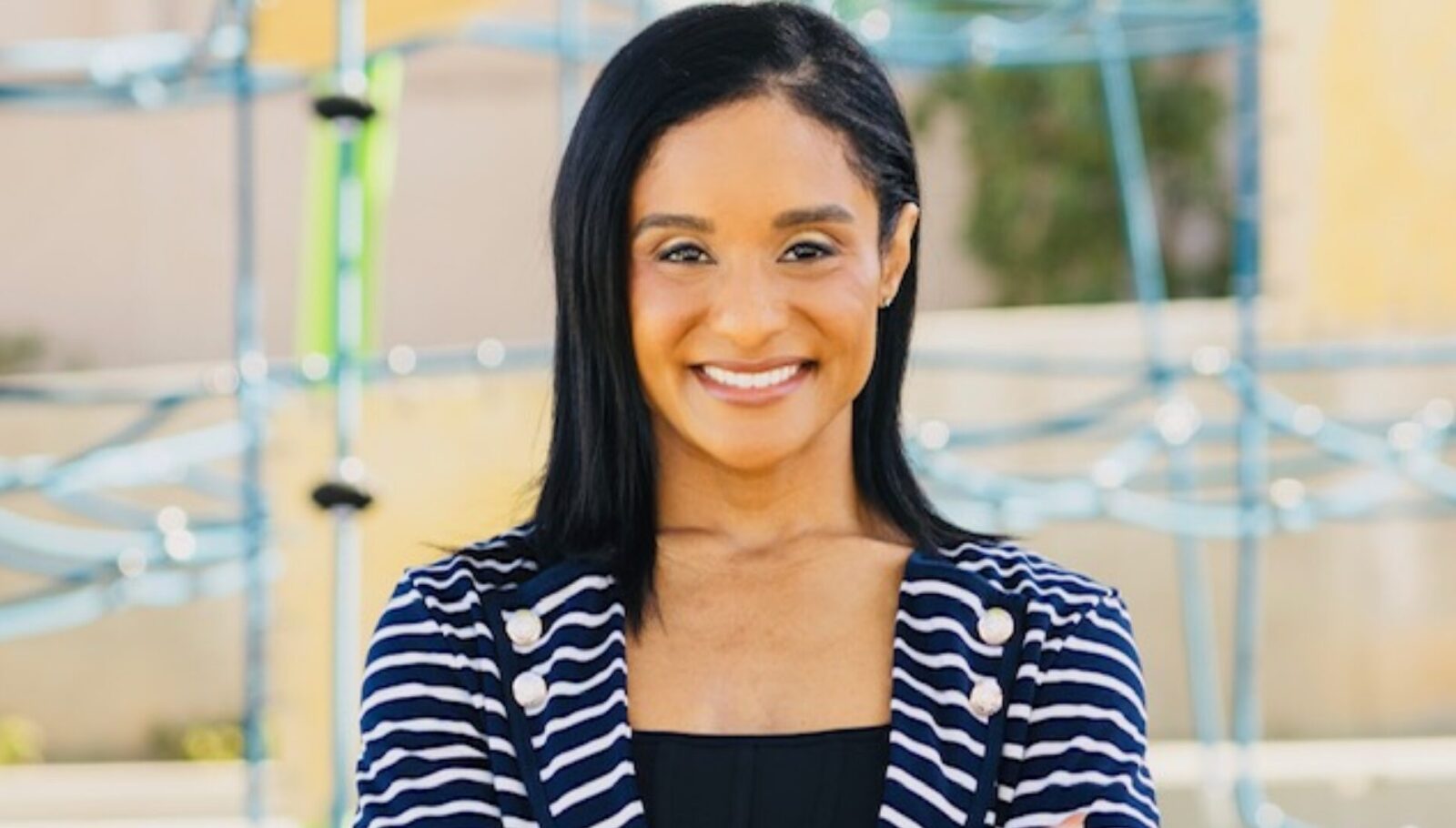
Shenea Booth, known professionally in the entertainment world as Shenea Stiletto, is one of those artists. She is also someone who learned how to turn survival into advocacy and advocacy into structural action.
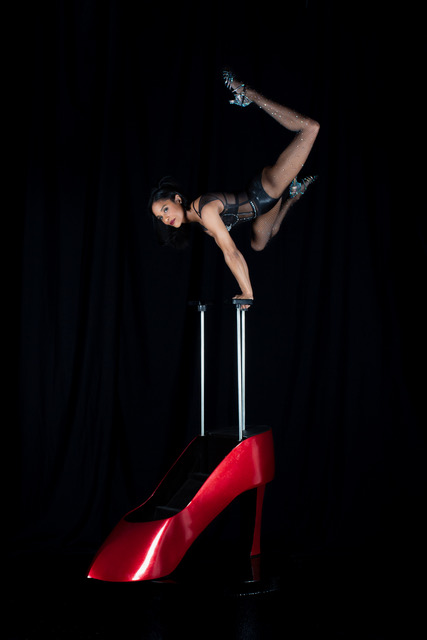
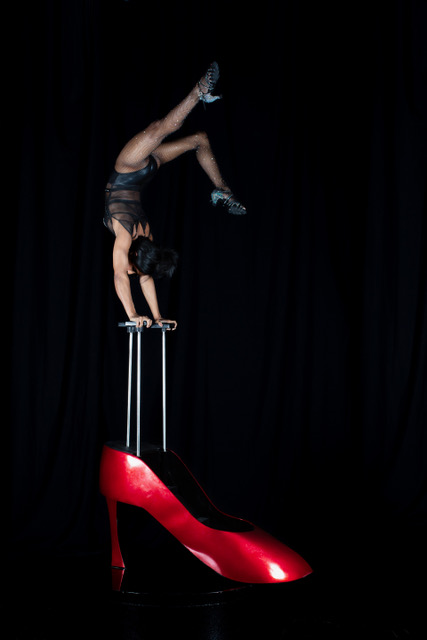
A world-champion acrobatic gymnast and USA Gymnastics Hall of Fame inductee, Shenea built an international performing career spanning some of the world’s most prestigious stages, recognized for technical excellence and discipline. As a Las Vegas resident artist and touring performer, she appeared in large-scale productions across circus, theatrical, and commercial platforms. A stunt performer and SAG-AFTRA member, her experience grounds her perspective not only as a freelancer, but within union frameworks and worker-protection systems.
In 2024, her advocacy reached the federal level through sustained policy engagement at the White House and in Washington, D.C., focused on labor protections, safety standards, and recognition of circus and live performance as a legitimate workforce sector. Her work consistently reframes the circus arts not only as culture, but as labor deserving visibility, rights, and longevity.
Now, Shenea Booth is bringing that lived knowledge into the civic arena as a candidate for Nevada State Assembly, District 22. Her transition from center stage to public service reflects a clear belief: artists, independent workers, and cultural professionals deserve representation in the policy conversations that directly shape their livelihoods.
I sat down with Shenea to talk about her journey from international performer to industry advocate, federal policy participant, and candidate, and asked her what it means to step forward as one of her community’s own.
Andrea Honis: You’re now stepping into the role of a candidate for the Nevada State Assembly. What has this transition meant for you personally, and what led you to decide that this was the moment to run?
Shenea Booth: From the outside, especially over the last six years, this might look like a logical next step. I’ve spent a long time encouraging circus people to run for office. But whenever someone suggested that I should run, my answer was always no. I didn’t want to be the candidate, I wanted to support and encourage others, not just artists, but anyone connected to the circus world, to step into leadership and public service.
For years, my role was to be an advocate and a support system, while staying deeply embedded in circus. That work was shaped by other experiences in my life that pushed me toward advocacy long before this moment.
I’m not running for president, governor, or Congress. But any race today is brutal. Politics isn’t what it was 30 or 40 years ago. Today it feels like a machine. My advocacy work made this run possible, but that doesn’t make it easy.
At my core, I’m a performer. Circus is central to my identity, and the idea that people might stop seeing me as part of this industry is painful. At the same time, I believe I can do meaningful work in the Nevada State Legislature. I’m proud to represent a community I’ve poured everything into, and I want this run to give something meaningful back to circus and increase its visibility.
This decision came after many long conversations with people I trust, and a hard look at what was realistic. You don’t get paid to run for office, so most candidates keep their day job, or as we say in circus, their night job. My career can’t look the same right now as it did when I was touring internationally. I can’t leave the country for long stretches, and that required real boundaries and difficult choices.
I had to be honest about my limits and about burnout. I tend to do a lot, probably too much, but that comes from wanting to support others who are giving back to this industry. That instinct is part of what brought me here.
There’s also a real shift in how people respond to you as a candidate. I’m grateful that I can walk into rooms and introduce myself as a professional acrobat and circus industry professional in Nevada. That identity carries respect locally, and even people who aren’t politically engaged are often curious and softened by that connection. In a charged political moment, that mattered in my decision to move forward.
AH: Artists are often freelancers and independent contractors, sometimes called passion workers. What did your early career as an artist teach you about the everyday realities and needs of working people?
SB: Oh, gosh … it taught me everything.
That’s why I speak so loudly and with so much passion. I’ve been in this space since I was a teenager, and I saw immediately how hard it is to be an artist and an independent contractor and how deeply unfair it is to be placed into a lesser category of worker simply because you chose this path.
Artists work incredibly hard and the work is frequently dangerous. Yet we have access to only the bare minimum of benefits, especially when compared to standard workers who receive protections simply by not being self-employed or having to run a small business just to do their job.
From a young age, I noticed there were almost no safety nets around this kind of career. Anything can happen, and you’re expected to figure everything out on your own. And the work is still treated as niche, even as many traditionally skilled workers are now facing similar conditions. That’s why I often talk about being an entrepreneur in circus, a “circuspreneur”, even through my podcast.
You’re dealing with non-traditional taxes, specialized professionals, and legal compliance, often at 16, 17, or 18 years old. Even if you start in a structured environment, there usually comes a point when you’re on your own. Without financial knowledge, physical care, or the right insurance, the longevity of your career is at risk.
We don’t live in a system that supports those realities. You can gain knowledge and still face a system stacked against you as an artist and skilled worker. This kind of career takes a particular type of person and a strong community.
I was able to get as far as I did because people helped me when I reached out. But it shouldn’t be this hard to enter or sustain a career in our industry. This work has shown me how easily people fall through the cracks when policy doesn’t reflect the realities of gig workers and independent contractors. If decision-makers don’t understand that lived experience, real change won’t happen.
AH: You are a survivor of systemic abuse within USA Gymnastics. I got to know you during that period and I’ve always seen you as an alchemist. You transformed pain into advocacy, not just for yourself but for others. How did surviving a broken system change the way you understand power, responsibility, and leadership today?
SB: Thank you, that’s a meaningful question.
What I experienced was a ten-year journey of testifying under oath, appearing in court, and watching settlements evolve. That process has been filled with contradictions. You know people one way, then learn things you never imagined. You hold the relief of seeing friends receive justice while reckoning with the fact that people who were kind to you (even formative) were deeply harmful to others. These cases will have consequences for many years as investigations continue, people are imprisoned or banned, and sometimes even allowed back into the system.
All of it changed me completely. It reshaped how I understand power and how I engage with it. Seeing behind the façade of power does that.
It heightened my awareness of vulnerable environments, especially when it comes to children. Once you see how easily children can be set aside for personal gain, you can’t unsee it. If I recognize even a trace of that dynamic, I feel compelled to intervene and pursue justice. It teaches you that no matter how something appears on the surface, you have to examine the structure beneath it.
You also learn to listen to the quietest voices in the room, not the loudest or most powerful. When I bring my gymnastics experience into circus advocacy, I often say, “This sounds like gymnastics ten years ago.” Living through this gave me a kind of foresight, an X-ray vision for power dynamics, abuse, and manipulation that many people simply can’t see.
For years, we were told we were lying, that nothing would change, and that those in power would always remain in power. When the truth finally surfaced, it was profoundly validating, it was the most validating experience of my life. But it also made something else very clear: advocacy alone is not enough. Real accountability only came when policy and law had to change. Legal frameworks had to shift for survivors to participate fully and for justice to occur.
At the same time, you learn the limits of power. Some people involved in our cases never went to prison. Deals were made, and we live with that reality. That’s why I continue to work on policy reform, so future cases move closer to full accountability. Our cases were imperfect, and the work now is to strengthen what comes next. This matters everywhere, because abuse exists in every industry and every environment. It’s something I know I’ll be committed to for the rest of my life.
AH: You’ve made the point that advocacy isn’t enough unless it becomes law and practice. You’ve also acted on that belief by building organizations, not just awareness. Can you talk about your work with the American Circus Alliance during the pandemic, your role in founding the Circus Arts Guild, and what organizing artists taught you about collective power and unionization?
SB: During the pandemic, it became impossible to ignore how little access to power live entertainers, performers, and artists actually have. That was the moment when reality was fully exposed.
Beyond limited emergency relief, there was nothing structurally in place to support us. The response was late and inadequate. So many people lost their careers, retired early, or lost everything. Watching artists across the industry go through that at the same time was devastating. That moment made it clear we had to come together as a collective, because that’s where our real strength is.
Circus can be very individualistic in how success looks, even though it’s deeply communal. It often feels like everyone is operating in their own silos. A major reason is that we don’t have a union structure for circus in the United States. When people ask why circus struggles to act together, my response, especially in non-circus rooms, is always the same: why don’t you organize? Why don’t you fight for the labor rights every other sector has fought for over decades? Where are your lobbying efforts?
That thinking crystallized during the pandemic, beginning with my work leading the advocacy committee at the American Circus Alliance and evolving into the creation of the Circus Arts Guild. When you’ve been in advocacy long enough, you understand the limits of what certain spaces can do. If you want to influence policy and lobbying, you need infrastructure that allows you to go deeper. That’s what the Circus Arts Guild was built to provide.
Our work focused on expanding the understanding of circus as an industry, not just an art form or a community, but a workforce sector that deserves a seat at labor and policy tables. Even within arts spaces, it was eye-opening to see how underrepresented the circus has been. That realization led to direct engagement with congressional offices, building on my experience as both an advocate and a survivor of USA Gymnastics.
Through the Circus Arts Guild of America, I believe we can continue shifting conversations in Washington, D.C., and nationwide, supporting the industry at the local, state, and federal levels through policy.
One of the clearest lessons from my survivor advocacy work is that policy is the most effective way to create lasting change. Policy creates rights that don’t expire. During the pandemic, many solutions were temporary. Our first question in meetings was always: how do we create support systems that last?
That has been the work ever since. Drafting policy from scratch is difficult. Over the past six years, we’ve developed language and messages that resonate with congressional offices, state officials, assembly members, and city councils, spaces where circus has historically been absent. It was discouraging to see that absence, but also empowering to realize how much power we actually have to set our own standards.
If circus is going to be represented at any table, it needs to be represented by circus people. If we don’t enter these conversations ourselves, others will do it for us, without understanding our workers or realities. That’s how policies get created that don’t reflect us, or actively leave us behind.
The work has been deeply grassroots: state by state, city by city, office by office, teaching officials about our industry, explaining our needs, and pushing for policies that truly support our businesses, workers, and nonprofits. Often we’re told, “There’s already a policy that might help you.” And the work has been responding honestly: that policy doesn’t reflect our needs, but we have something better.
Most people in circus want these changes. But when an industry hasn’t fought for itself this way before, it can feel intimidating. Still, we are more than capable of speaking a bigger game. That’s been my work with the American Circus Alliance, and it’s the work I want to continue through the Circus Arts Guild of America, engaging existing systems where possible and building new ones where necessary.
Many systems were never built for us. The goal is to reshape them so they reflect who we are. Other sectors do this every day in Washington, D.C., lobbying clearly and unapologetically for exactly what they want.
AH: Since many of our readers come from the circus industry, can you give an update on where the key initiatives stand, including Safe Sport expansion, circus arts category recognition, and worker safety and wage protections? And for artists who are reading this and want to get involved, how can they become part of the Guild?
SB: You can join the Guild by signing up at circusartsguild.com. It’s simple and free. There’s no membership fee at this time, and members get access to our resources, our work, and our calls to action as they’re released.
Over the past several years, we’ve produced a substantial body of material that can support anyone who wants to advocate for the industry. You don’t need us to advocate, you can do that on your own, but our goal is to help people advocate effectively in their own cities and communities using tools that actually hold weight. That’s why we’ve focused so heavily on clear policy and legislative language.
One of our core efforts is the Safe Art and Safe Circus Act, which would expand the authority of the U.S. Center for SafeSport. Many circus environments already adopt SafeSport-style policies, and I strongly encourage that. But SafeSport currently has no jurisdiction over circus arts, aerial arts, or other niche disciplines, meaning artists can’t file reports that can be investigated. This bill would change that by giving SafeSport the authority to act on behalf of circus workers.
We have strong interest from congressional offices and senators. What’s needed now is continued outreach. Artists can contact their own senators or members of Congress and simply say, “I support this bill.” That matters, and it’s how offices respond.
We also have the Circus Workers Act, that is a labor rights bill designed to protect circus workers without requiring unionization show by show. It reflects the reality that many circus professionals hold multiple roles, such as artist, director, owner, producer, and sometimes all at once. After years of work, it became clear that comprehensive legislation was one of the most viable ways to support the complexity of our sector.
In addition, we are advancing the Circus Arts Category Recognition Act, which would formally codify circus arts into law. Many European countries and Canada have already done this. In the U.S., circus doesn’t currently appear in federally recognized data, and this bill would change that. This effort is primarily congressional in scope.
 Together, these three bills were brought to the White House, where we spent nearly a year in sustained discussion and received extensive feedback on language and strategy across local, state, and federal levels.
While the efforts are federally focused for broad impact, we’re also pursuing state-level versions. Advocacy doesn’t have to begin in Washington, artists can work through state senators and assembly members as well.
We are closer than we’ve ever been. Much of this work would likely already be complete if not for changes in administration and impacts on the NEA. Government transitions matter, but we continue to have active conversations and strong support.
I often remind people that the USA Gymnastics bill passed in 2016 was signed into law during the Trump administration. You never know which administration or level of government will ultimately support you, which is why momentum matters. A great deal of strategy is happening behind the scenes, and progress doesn’t always look the way people expect.
What matters is continued pressure, where performers and industry workers contacting offices, calling representatives, and advocating for these bills. That’s how change happens. I also encourage people to meet with local officials or go to Washington, D.C., but to do so with intention. Meetings grounded in the actual bills on the Circus Arts Guild website are far more effective than unfocused conversations. Alignment creates power.
These bills were designed so everyone in the circus sector can see themselves reflected — from the smallest touring company to the largest organizations. Circus is multifaceted, and everyone deserves representation.
AH: We know the performing arts are an economic force, even though they’re not always recognized as one, and this is especially true in Las Vegas. How do you see the performing arts functioning as a major economic driver for Nevada, where you’re running for office?
SB: We’re in these rooms constantly, Andrea, every day. If this should be an easy conversation anywhere, it should be in Nevada. But it isn’t, and that’s what’s so striking.
I’m currently the vice chair of the advocacy committee for the ACE Chamber, the Arts, Creative, and Entertainment Chamber, the first of its kind in Nevada. Until recently, there was no chamber representing arts and entertainment at all, despite Nevada having chambers for nearly every other sector. Even the officials who helped create it admitted, “We didn’t realize this sector didn’t have one.”
I had assumed some level of representation already existed, that’s often how we think about the arts. But once you enter policy conversations, you realize how limited that representation has been. It’s difficult to say without diminishing the work of long-time advocates, but for an industry that drives tourism and economic activity in Nevada, the gap is undeniable.
The inequities are clear: wages, benefits, job security, and profit distribution, especially in a state where so many businesses profit directly from our labor. These are structural issues that can and should be addressed at the state and local level, which is why I encourage artists and industry workers to step into these conversations.
When you walk into offices and hear, “We thought circus had a union,” it’s alarming. Staffers don’t know. Field teams don’t know. We simply aren’t part of the dialogue. And yet you see ribbon cuttings and handshakes at shows, gestures that don’t translate into real support for workers.
You hear, “You built Nevada.” But then you ask: do you know how many performers earn minimum wage, rely on SNAP benefits, can’t afford housing, or work without workers’ comp, disability coverage, or insurance once they step offstage? Most officials don’t. That’s when the apologies come, or the assumption that someone else was handling it.
I’m encouraged by the growing focus on the creative economy, because that’s what we are. And honestly, I prefer to say it plainly: we are the economy. Live performance is consistently the primary economic driver people associate with Nevada.
At the same time, Nevada needs diversification. When tourism slows, performers are forced to leave, and the state loses skilled workers. That’s why portable benefits are a policy priority for me. If artists leave because work dries up, they shouldn’t lose the benefits they’ve built here — otherwise, they don’t come back.
Meanwhile, other sectors move into Nevada with strong lobbying power and receive incentives, infrastructure support, and relocation benefits, even though live performance remains the main draw. So where are those benefits for our sector?
I’ve often said Nevada has one of the strongest circus voices in the world and it doesn’t use it. This goes beyond opening one more show. Shows close, companies struggle, and wages and benefits are framed as impossible to improve. But other industries fight and succeed. We need to do the same.
When I’m the only circus representative in rooms full of people from other sectors who are unapologetic about their demands, it changes how you understand power. We shouldn’t have to endlessly adapt to existing structures. We should be able to say clearly when policies harm our performers, contracts, and long-term sustainability.
Producers want stable, fair jobs, but more must be done to make that possible. Advocacy can’t stop at grants or symbolism. We need to demand more.
That’s what I hope to do as a voice in the legislature, extending advocacy into lasting policy. This campaign isn’t just about this race; it’s about building long-term relationships so our industry is consistently recognized and taken seriously. That’s the work of the past six years, and it’s the work I intend to continue.
AH: And I would say amen to all that and “break a leg,” Shenea, as you step into this new chapter. Your journey from the stage to public service is not only powerful, but it’s deeply needed. For the circus and wider performing arts community, and for the many creative workers watching, this moment matters.
Learn more about and support Shenea’s campaign through her website.

Back to Home
Editor's Note: At StageLync, an international platform for the performing arts, we celebrate the diversity of our writers' backgrounds. We recognize and support their choice to use either American or British English in their articles, respecting their individual preferences and origins. This policy allows us to embrace a wide range of linguistic expressions, enriching our content and reflecting the global nature of our community.
🎧 Join us on the StageLync Podcast for inspiring stories from the world of performing arts! Tune in to hear from the creative minds who bring magic to life, both onstage and behind the scenes. 🎙️ 👉 Listen now!
