Circus and Its Others at a Turning Point
As 2026 begins, North America, and particularly the United States, finds itself in another historical period where diversity, equity, and inclusion are contested again. The terminology has been pushed to the margins, no longer seen as a shared responsibility but as something organizations try to avoid. Across the performing arts sector, cancellations, public protests, and reports of threats against artists have accompanied work that contradicts prevailing ideologies. History offers many precedents for this moment: periods when artistic expression became tense, and difference itself was perceived as provocation.
In this context, organizations and initiatives that actively create space for radical inclusivity are not simply relevant; they are essential. Circus and its Others (CaiO) is one such initiative. One I have followed closely since its inception in 2014. For over a decade, CaiO has remained committed to examining difference and otherness within contemporary circus practice.
Circus and its Others is an international, cross-disciplinary research project exploring how contemporary circus artists and companies engage with these concepts in their work. Through its activities, including four international conferences (2016, Montréal; 2018, Prague; 2021, Davis; 2023, Bogotá) and themed peer-reviewed journal publications, CaiO brings together scholars from a wide range of disciplines, artists and arts professionals, and the broader community to engage with circus as a vibrant and complex contemporary art form.
Founded in 2014 by Charles R. Batson and Karen Fricker,Circus and its Others began as a focused inquiry into difference in contemporary circus. Batson, a professor at Union College, brings research interests at the intersection of circus studies, queer studies, and French and Québec studies, alongside curatorial work exploring research-creation and queer circus practices. Fricker, an adjunct professor at Brock University and editorial director of Intermission Magazine, is widely recognized for her work in circus and theatre studies and for advancing more equitable practices in arts criticism and higher education.
Over the past decade, CaiO has grown into a vital international community of academics and artist-scholars. That community, intentionally cultivated by its founders, has become one of the project’s most significant assets, forming the foundation for its long-term sustainability.
As the world continues to shift, and the need for this kind of work intensifies, CaiO is also evolving, through a network of projects they are calling Circus and its Others: Futures, which includes an expanded leadership model, an archive, and a participant survey. The work continues forward, with a fifth international conference already in planning, to be held in India.
To reflect on CaiO’s first decade, its current transition, and what lies ahead, I spoke with the project’s founders and with a member of their emerging leadership team, Aastha Gandhi, Assistant Professor in the Graduate Programme for Performance Studies at Ambedkar University, Delhi.
Andrea Honis: For those who may not have followed Circus and its Others closely, how would you describe the trajectory of the project across its first four conferences, and how that journey has led to “CaiO Futures”?
Karen Fricker: Circus and its Others started as a conversation in the lobby of the Tohu, Montréal’s premier circus venue, in about 2013. Charles and I had both found the show we’d just seen rather heteronormative, as was much of the circus we were seeing those days, and we started asking each other why. The conversation expanded into a consideration of representations of difference in contemporary circus more broadly, and we found there was so much to talk about that we invited others to join us. And so it’s gone for the past dozen years: We’ve found that scholars, artists, and circus professionals around the world were as interested in these questions as we were, and that curiosity has led to four-going-on five international conferences, five peer-reviewed journal issues, a digital event series during the pandemic, and a vibrant community of thought and practice. The momentum has been thrilling and non-stop, and it was really only at the 10-year mark that we took a pause to consider how to make the project sustainable.
AH: What made now the right time to begin reimagining the project’s leadership structure and long-term stewardship?
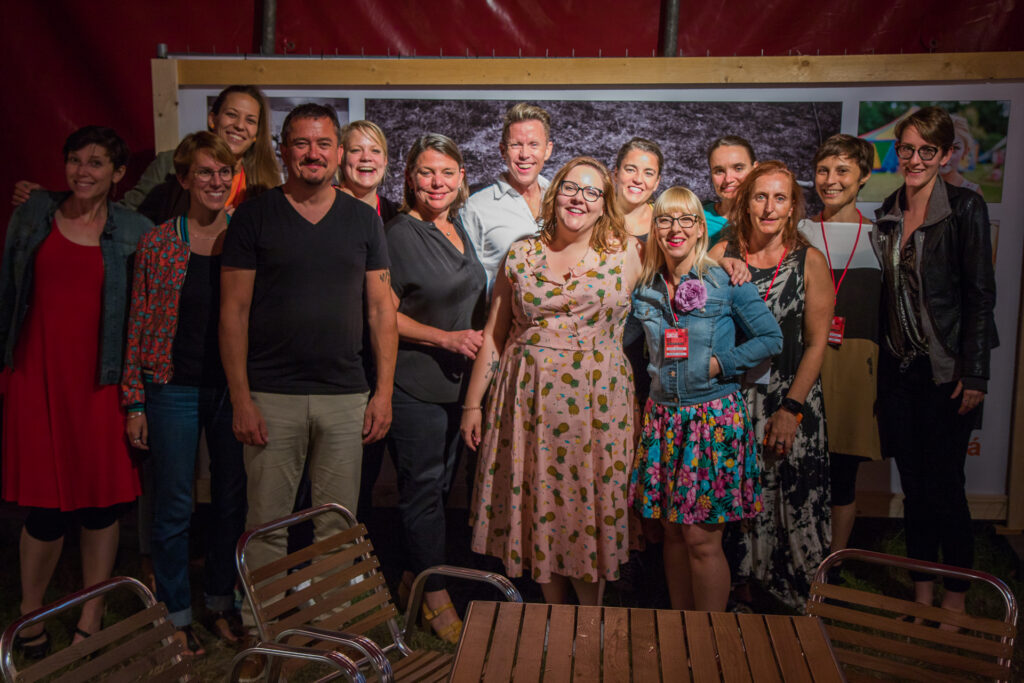
Charles R. Batson: It has been such a joy to make so many connections over these years since 2014, when we formally organized a follow-up to that lobby conversation and brought other people together to talk about circus and difference. We’ve seen the project grow and expand in exciting ways, with scholars and practitioners from many parts of the globe joining our work and engaging in the questions related to CaiO. It seemed vital to Karen and me that this growing community be reflected in leadership, organization and, importantly, decision-making. The more voices heard, the better! We also so firmly believe in this project, and the contributions that we feel it has made over the years to communities and scholarship, that we want the project to have vibrant life, even if, one day or other, Karen and I will head to some version of retirement (don’t worry; that’s not happening quite yet though!).
AH: You’ve described the expanded leadership team as one of CaiO’s most valuable outcomes. How does this collective model change the way decisions, responsibilities, and visions for the project are shaped? As founders, how has it felt to intentionally plan for a future where CaiO can thrive beyond your own central leadership roles? What values were most important to preserve in this transition?
KF: The transition is still relatively new, and evolving. We started by canvassing colleagues who have made a sustained contribution to the project, and assembled a leadership group of 13, three of whom are taking a back seat role at the moment as they manage heavy workloads. The other 10 of us have split into different committees to manage different areas of project activity: creative/academic leadership, festival leadership, and big-picture project management. Now that we’re actively planning the 2027 conference in Kerala, there are subcommittees as well. Charles and I are still overseeing it all, and Aastha, the local co-organizer of the Kerala gathering, is basically on every conference subcommittee – something that seems important and inevitable at this point, but that we’ll hopefully be able to mitigate this year so that she’s not overloaded. In time, our hope is that members of the expanded leadership will continue to step forward to lead on specific projects, and that core knowledge about and agency within the project will reside with all in that group.
The values that we’re working to keep central are collegiality, collaboration, curiosity, reflexivity, and joy – always joy.
AH: In practical terms, what does sustainability look like for a project like CaiO that is not an institution, but a research network and community?
CRB: Your question is exactly our question! And we know that it is by having yet more voices contribute to the conversation that the answer will be found. With the archive providing some historical and accessible base to our work, and ultimately with publication of the results of our survey on the outcomes of CaiO’s work (which, importantly, includes questions precisely on how our research-and-creation communities have grown or otherwise been touched through CaiO’s conferences and publications), we hope that we can trace some specific trends, and offer some specific vocabulary, for the sustainability of our project and network. For now, we can report that our emails and WhatsApp threads continually bring reports of joy, development, and celebration of connections that CaiO has brought to people! May that continue!
AH: Why was it important to formally archive CaiO’s history at this stage of the project, and what gaps does the archive help address in circus studies more broadly?
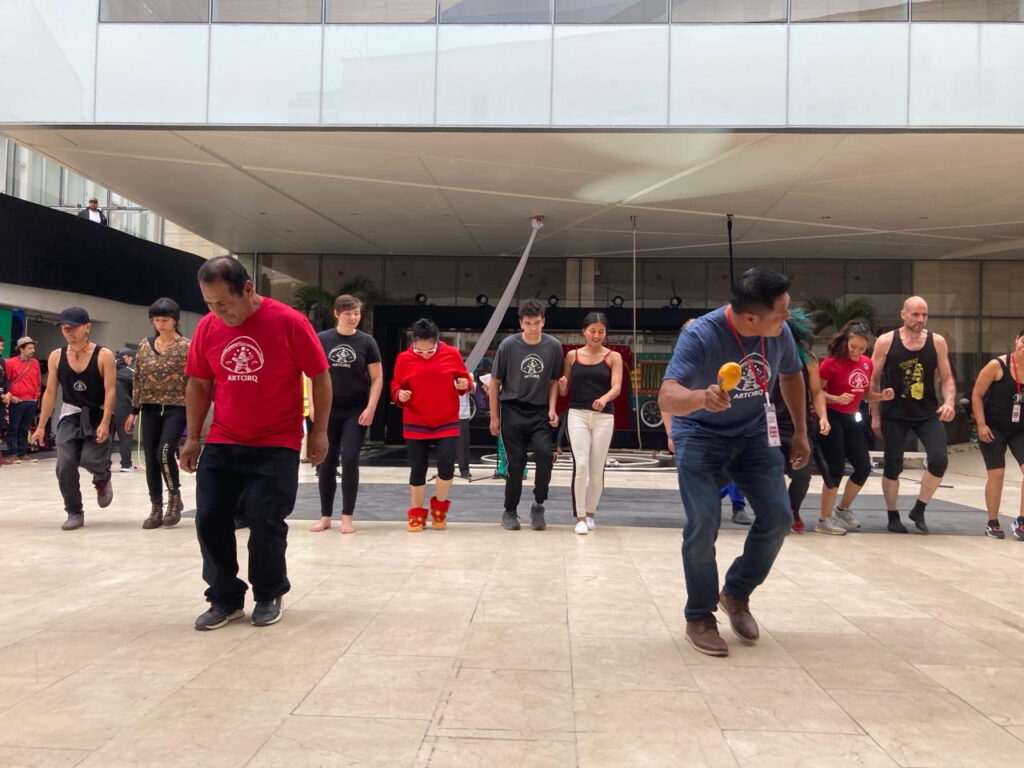
KF: On a practical level we realized we needed the archive because records of what we’ve done over these 12 years were spread between personal computers and institutional servers, and it was getting unwieldy to keep searching around for “how many people participated in that conference?” and “who led that panel?” This was also part of the process of formalizing institutional memory beyond Charles, me, and those stellar colleagues who co-organized CaiO conferences with us (L. Patrick Leroux, Veronika Stefanova, Ante Ursic, Olga Lucía Sorzano, and now Aastha Gandhi). In addition to materials from all of our conferences and events, the archive includes links to our journal issues (all of which are open access). We believe that having an accessible record of all CaiO activities will benefit other circus scholars interested in questions of difference, as they will be able to easily search to see what topics, themes, and artists/companies have received attention (or not!) in our inquiry. Circus studies itself is quite diffuse, so bringing all of our materials into one searchable online space feels like a significant contribution.
AH: How do you envision researchers, artists, and students using the CaiO archive in the future? What kinds of questions might it enable that weren’t previously possible?
CRB: It is our hope that the archive can offer some historical glimpse on the work over this decade-plus work of activity. With the Collaboratory for Writing and Research on Culture as our partner, we’re targeting having our materials (publications, conference programs, videos, teleconferences, digital series) accessible and searchable, through which people can dig, in one space, into hundreds of people’s contributions related to circus and difference. We imagine that there are as many questions as there are researchers and artists: we hope that this archive of multiple hundreds of documents, files, and videos can help some artist or researcher or student find answers to their questions – or, at least, to find yet another question to pursue!
AH: The recent and upcoming publications mark the end of a significant cycle for CaiO. How do you see these past issues functioning together as a body of work?
KF: It is fascinating – and exciting – to look back on our five special issues and to note patterns and evolutions among subject matters, themes, and methods. Interestingly, the theme that emerges most frequently among the 40+ articles we’ve published is history: Not because the authors are necessarily engaging in historiographic research, but rather because they are exploring and challenging historical narratives, searching for gaps, and/or inserting previously overlooked experiences and narratives into circus histories. Another keyword that emerges almost as many times as history is “practice as research,” and this is a methodology that has appeared with increasing frequency in CaiO publications. This is in part because Circus: Arts, Life, and Sciences, the journal with which we’re in the process of publishing two special issues, has a “Life” section in which artists can offer creativity-led contributions involving video, and this has allowed us to include offerings from artist/scholars combining creative work and writing about that work.work. Gender has also been a consistent theme in our publications, with scholars and scholar/artists contesting gender norms and normativity in circus practices. As the project has grown to include more scholars from the Global South, themes of decolonization and challenges to Western-centric ways of knowing have become more prevalent in our publications. Notably, our most recent publications, CALS 4.2 and 5.1 feature articles treating subject matter that’s new for CaiO: circus and climate emergency; the effects of COVID-19 on circus practices; and transgender circus artists.
AH: What distinguishes CaiO-related publications from other academic writing on circus and performance?
CRB: CaiO’s guiding theme has been the exploration – and centering – of the role and place of difference in circus practice and research. We have worked to have what otherwise may have been seen as marginal take center stage as primary questions of research and creation.
CaiO V: Kerala, India
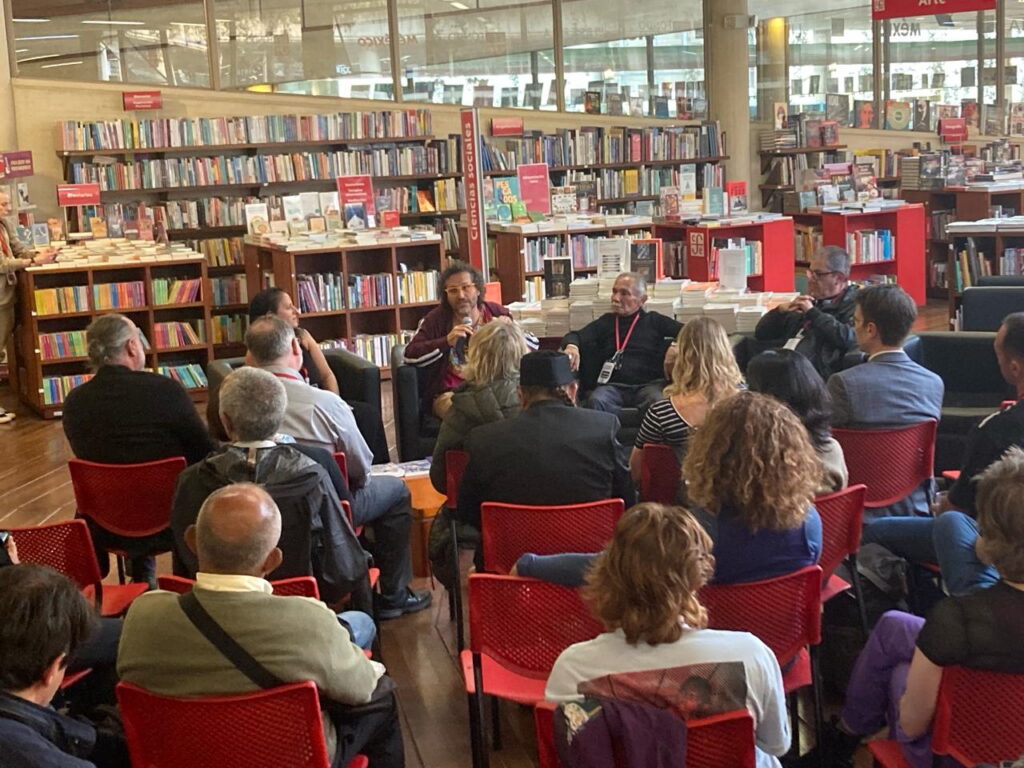
For its fifth international edition, Circus and its Others is situating CaiO V in Kerala, extending the project’s ongoing shift toward broader geographic and conceptual horizons. Following the 2024 conference in Bogotá, the move to India reflects a continued engagement with perspectives beyond Euro-American frameworks and a commitment to rethinking how “otherness” is understood in relation to place.
Kerala has a long and complex history shaped by mobility, exchange, and cultural encounter, as well as a deep-rooted relationship to circus practice. I asked Aastha how these histories inform CaiO V, and why she believes Kerala offers a particularly meaningful context for this next stage of the project.
Aastha Gandhi: Kerala, located on the southern coast of India, has long been a key hub for international trade and economic exchanges, a trend that continues today. Known for its rich cultural activities, Kerala has been a major centre for the spice trade, attracting people from various parts of Asia, Arab, and Europe.
Thalassery, a coastal town in northern Kerala, evolved into a cosmopolitan hub and became the ideal ground for the establishment of India’s first circus training institution. Founded by Keeleri Kunnikannan in 1888, this institute offered an inclusive environment where students of diverse castes and gender were trained in Indian forms of physical conditioning and knowledge systems about the body along with western circus techniques. Over time, Kerala became the heart of circus practice in India, with its people contributing to some of the most enduring circuses in the nation.
With the last conference in Bogota in 2024, CaiO took a significant step into the global south for the very first time, paving the way for new thoughts and understandings of circus arts centered around decoloniality, mobility, and solidarity. Bringing CaiO to India appeared to be the desired progression in this initiative to further expand the diverse interpretations of ‘others’ that CaiO collates through its varied engagements, including conferences and publications.
As a thriving cultural capital of Kerala which hosts some of the biggest international theatre festivals of India, Thrissur is the ideal city to host this conference, with Dr.Abhilash Pillai, Director, School of Drama and Fine Arts, University of Calicut, as the local host for the conference and the festival director. Prodosh Bhattacharya, an emerging circus scholar is also serving as a member of the local host team.
At the end of our conversation, when looking back on more than a decade of Circus and its Others, Karen pointed one more time to the power of community as the project’s most enduring lesson. What began as a question about contemporary circus and difference became a necessary gathering point in an otherwise diffuse field, bringing people into sustained conversation.
In 2026, a time in history when difference is again treated as risk, CaiO’s continued growth across geographies underscores a simple but vital truth: academic and artistic fields are shaped not only by ideas, but by the communities willing to carry them forward together.
To access CaiO’s publications and stay engaged with the organization, visit their recently updated website.
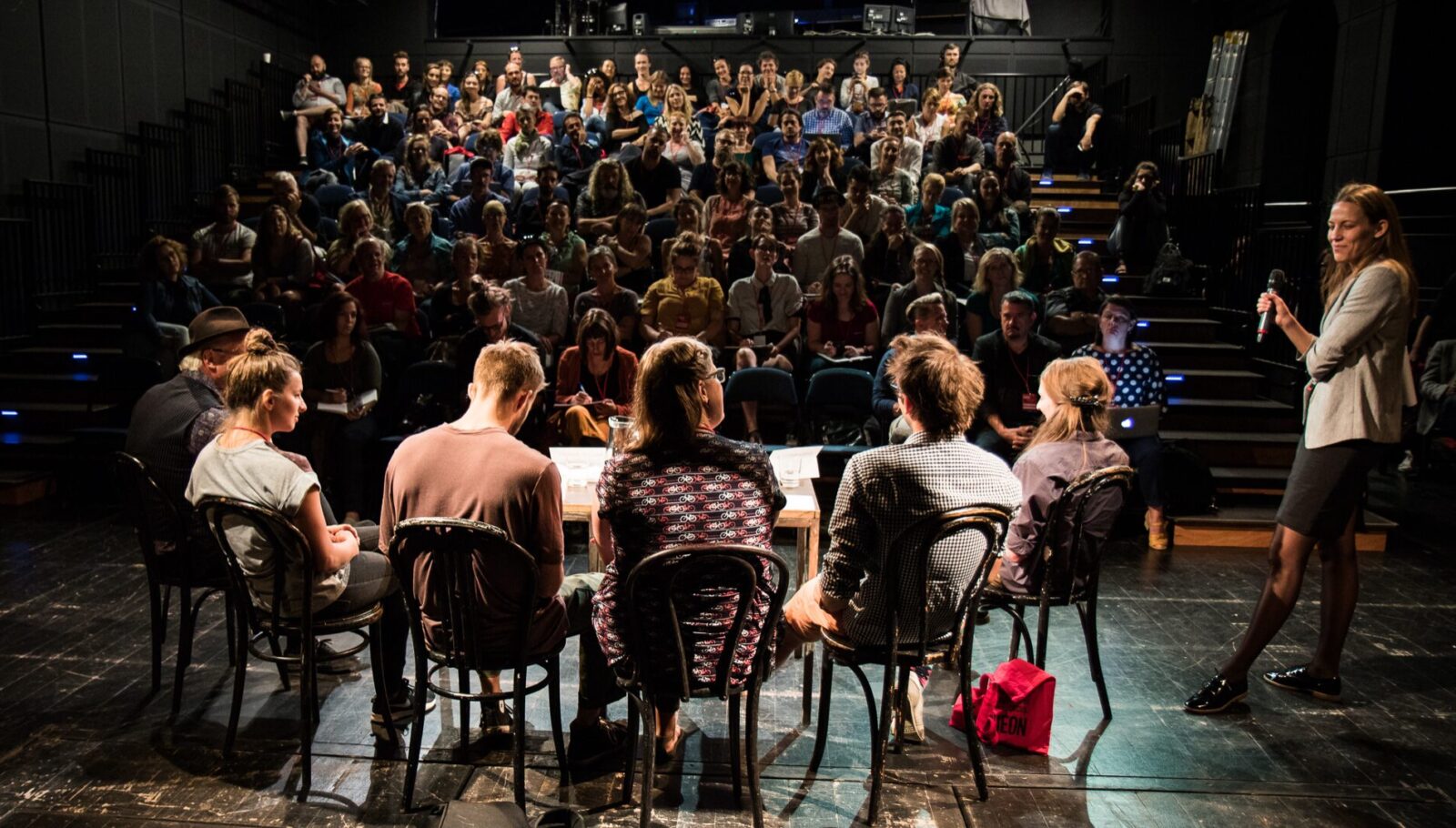
Main image: A panel about Czech circus at the CaiO II conference in Prague, 2018. Conferece co-organizer Veronika Stefanova is at right. Photo: David

Editor's Note: At StageLync, an international platform for the performing arts, we celebrate the diversity of our writers' backgrounds. We recognize and support their choice to use either American or British English in their articles, respecting their individual preferences and origins. This policy allows us to embrace a wide range of linguistic expressions, enriching our content and reflecting the global nature of our community.
🎧 Join us on the StageLync Podcast for inspiring stories from the world of performing arts! Tune in to hear from the creative minds who bring magic to life, both onstage and behind the scenes. 🎙️ 👉 Listen now!
