Music, Poetry, Presence: Anna Kuk on Breaking Classical Boundaries
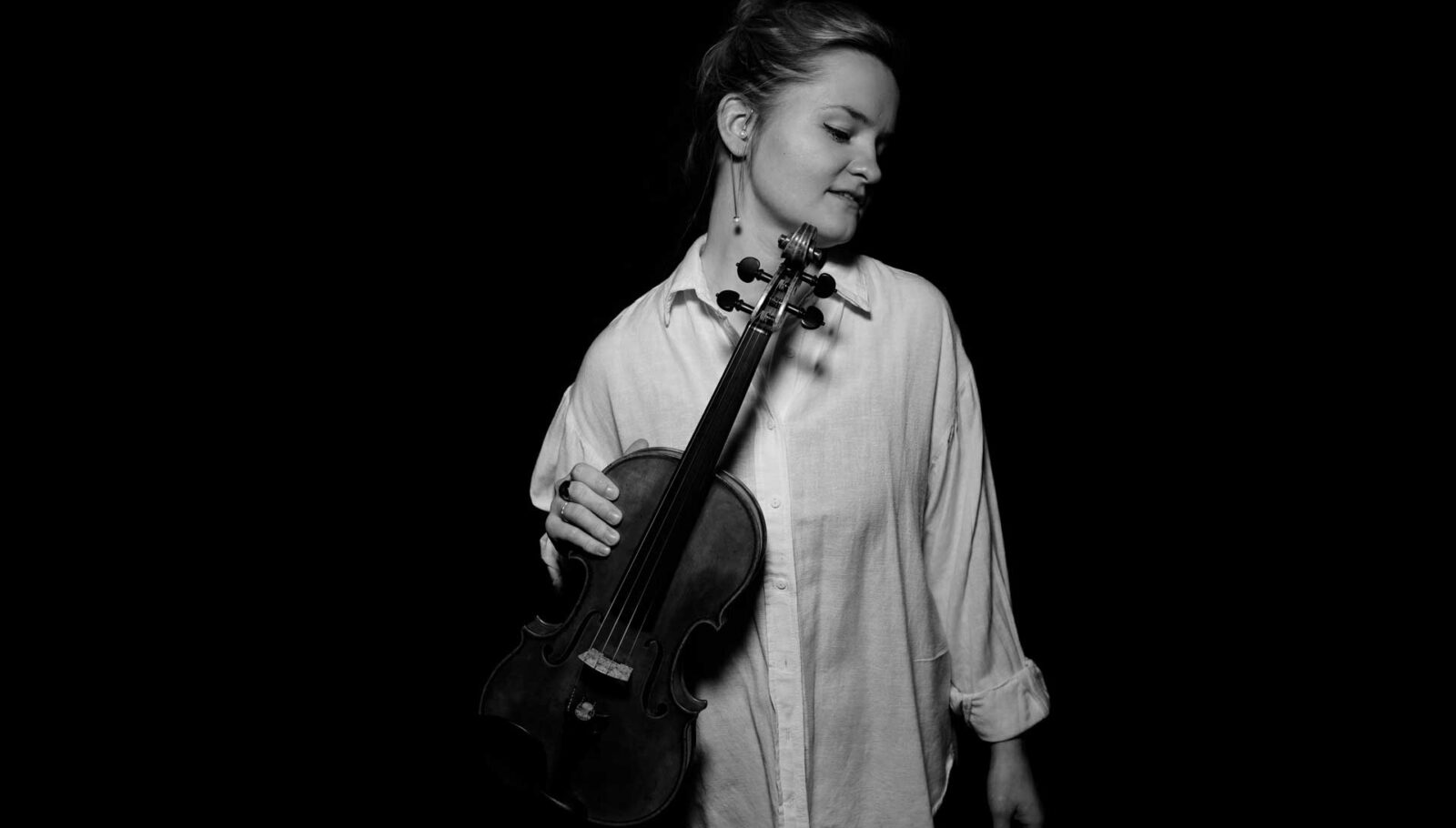
Polish violinist, poet, and conceptual thinker Anna Kuk does not believe music should be consumed passively. For her, sound is not an isolated event framed by applause, but a living, breathing experience, one that unfolds in space, movement, language, and time. Based in Paris and performing internationally across more than 19 countries, Kuk’s artistic career spans orchestral performance, experimental chamber music, poetry, and philosophical inquiry. At the center of her work is a single question: How do we truly listen—and what happens when we do?
On the TheatreArtLife Podcast (now known as the StageLync Podcast), Kuk shared her journey as a musician, poet, and leader in the arts, offering reflections on tradition, innovation, language, and the quiet power of patience.
A Life Shaped by the Violin
Kuk comes from a deeply musical family, so much so that every member played the violin. Her father was her teacher for 12 years, and music was never a choice she consciously made; it was simply the environment in which she grew. “I don’t remember the moment I started to play,” she explains. “It was so natural.”
Like many musicians raised in artistic households, Kuk later questioned whether her path had been chosen for her. The answer came during her formal studies, when she realized she could not imagine life without music. “In the end, it was totally my decision,” she says.
While she performed in orchestras from an early age, Kuk delayed committing fully to orchestral life. Freedom mattered to her. She wanted to develop her own voice first, technically, emotionally, and personally, before merging into a collective. For Kuk, true collaboration requires individuality, not disappearance.
Reimagining the Classical Concert
That desire for agency and authenticity led to the creation of Reverb Ensemble, Kuk’s string quartet dedicated to breaking classical concert conventions. Traditional formats left her unfulfilled. “We sit still, we’re not fully involved as a public,” she says. “I wanted to break the fourth wall.”
Reverb Ensemble’s performances blur the boundaries between performers and audience, sound and space. Concerts unfold as continuous narratives rather than segmented programs. Musicians move through rooms. Audiences move with them. Applause is replaced by immersion.
One standout project took place in Kuk’s hometown, inside a former Jewish seminary. Musicians were positioned at the four corners of the space, playing with distance, acoustics, and natural reverb. Between pieces, environmental sounds, waves and voices emerged. Performers changed positions mid-concert, transforming listening into a spatial experience.
Some works were commissioned specifically for the space, including a piece by composer Przemysław Scheller, written for string quartet and architecture. Others spanned centuries, from Bach to contemporary music. What mattered was not era or style, but a shared emotional core. “We stick to the core,” Kuk explains. “Love can be spoken in many epochs. It’s more a space than a timeline.”
Music in Motion
Two projects stand out as personal milestones. One was a “musical gallery” performance in a Warsaw museum, where Reverb Ensemble moved through exhibition spaces, wrapping the audience in sound. “The music is in movement,” Kuk says. “Everything is about it.”
The other took place in Japan during a Biennale, where Kuk and her ensemble improvised live to an art installation. The musicians became part of the work itself, a “musical sculpture” in motion. Improvisation made each moment unrepeatable. “You cannot replay it,” she says. “It exists only now.”
Poetry as Foundation
Though known internationally as a violinist, Kuk describes poetry as the foundation of everything she does. “Poetry is not only words,” she says. “Poetry is music. Poetry is life.”
She began writing at seven or eight years old, later entering poetry competitions as a teenager. A pivotal mentor once told her bluntly that her work wasn’t good—but that she had potential. With guidance, Kuk refined her voice, studying both technique and style. In 2012, she published her first poetry collection.
Today, Kuk writes primarily in Polish, then translates her work into multiple languages—an intricate process she describes as both joyful and frustrating. Poetry, she believes, cannot be translated literally. Rhythm, melody, and emotional cadence must be reinvented in each language.
This linguistic sensitivity carries into her musicianship. Just as languages shape thought, Kuk believes they shape musical interpretation. German Baroque music, she notes, tends to feel more structured and rhythmically defined, while French music carries a different fluidity—despite identical notation. “We play music the way we speak language,” she says.
Women, Leadership, and Trusting Time
Kuk was one of 25 core participants in the Women Emerging Expedition, a year-long global leadership program culminating in an in-person gathering at the Rockefeller Foundation’s Bellagio Center. The experience, she says, was transformative.
The expedition explored leadership through a female lens, asking how women can lead without sacrificing identity. For Kuk, the journey was deeply personal. She realized she had been impatient, pushing herself to move faster than life allowed.
Through conversations with women across generations, she rediscovered something she believes women intuitively understand but are often discouraged from trusting: process. “We trust evolution,” she says. “We trust that our actions will give fruit in time.”
That insight reshaped not only her leadership perspective but her approach to art. “Pauses are also music,” she reflects. Learning to live with uncertainty—to allow things to unfold—remains challenging, but essential.
A Life Between Structure and Abstraction
Anna Kuk’s work exists in constant motion between structure and freedom, tradition and reinvention, sound and silence. Whether performing in an orchestra, improvising inside an art installation, or translating poetry across languages, she returns to the same principle: presence.
In music, in leadership, and in life, she reminds us that meaning is not always immediate, and that sometimes, the most powerful thing we can do is listen, wait, and trust what is already unfolding.
Watch the interview here:

Back to Home
Anna Kuk Anna Kuk Anna Kuk
Editor's Note: At StageLync, an international platform for the performing arts, we celebrate the diversity of our writers' backgrounds. We recognize and support their choice to use either American or British English in their articles, respecting their individual preferences and origins. This policy allows us to embrace a wide range of linguistic expressions, enriching our content and reflecting the global nature of our community.
🎧 Join us on the StageLync Podcast for inspiring stories from the world of performing arts! Tune in to hear from the creative minds who bring magic to life, both onstage and behind the scenes. 🎙️ 👉 Listen now!
