Imogen Ross: Eco-Creativity and the Future of Scenography
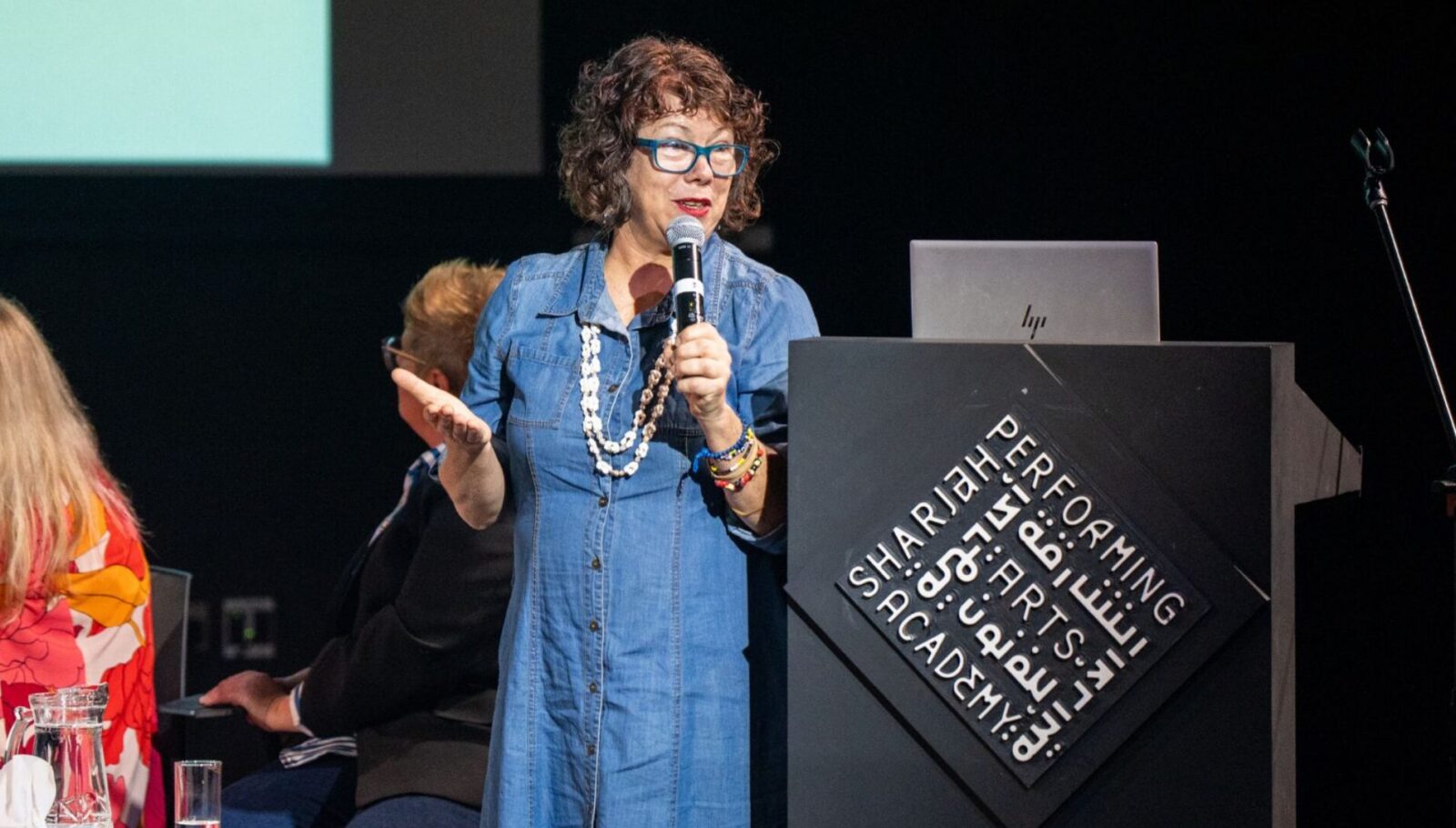
It isn’t every day I get to record in my own home country, but being back in Australia recently gave me the incredible chance to sit down with someone at the forefront of rethinking how we create: Imogen Ross. Imogen is a Sydney-based scenographer and the Sustainability Manager at NIDA, and her perspective on the future of the performing arts is truly eye-opening.
In an era of “fast theatre” and disposable sets, Imogen Ross is leading a quiet revolution. From her roots in regional New South Wales to her cutting-edge research into “living materials” like SCOBY, we explore how sustainability is moving beyond mere “constraints” to become a profound creative opportunity. We discuss shifting away from the high-pressure “hamster wheel” of production and moving toward a “slow river” approach to creativity that values the environment as much as the art.
This is just a preview of our deep dive into the intersection of art and ecology. Make sure to listen to the full episode dropping next week!
How did your upbringing in a regional town influence your approach to sustainable design?
Imogen Ross grew up in Armidale, where resources weren’t just a phone call away. Being part of a theatre family in a place without specialized stores meant that “necessity was the mother of invention.” They had to “make do” with what was on hand. While the 1980s saw a global shift toward a linear “take-make-dispose” economy, those early lessons in reuse and resourcefulness remained the bedrock of her practice, eventually aligning with today’s international frameworks for circular design.
How is sustainability being taught to the next generation of theatre makers at NIDA?
Rather than getting bogged down in complex carbon calculations immediately, Imogen uses the Theatre Green Book framework to encourage students to be conscious of their choices. She asks them to trace the journey of every material: Where did it come from? How will we use it? Where will it go? By treating sustainability as a design parameter—similar to budget or venue size—it becomes a stimulus for “eco-creativity” rather than a limitation.
Can you explain the concept of “Eco-creativity” with a real-world example?
Imogen Ross cites Tanya Beer’s work as a prime example. In a production centered on the fishing industry, the designer used polystyrene fish boxes to build the set. Polystyrene is typically a “no-no” material in green circles, but by using these modules and returning them to the fish market after the show, the production achieved zero waste. This choice not only extended the material’s life but also used the physical set to tell a deeper story about the industry being portrayed.
What is “SCOBY Scenography” and how does it challenge traditional design?
Imogen Ross is currently researching “more-than-human” frameworks by co-designing with SCOBY (the living culture used to make kombucha). Unlike timber or cotton, which are “killed” before use, SCOBY is a living organism. Imogen explores how this material breathes, reacts to air conditioning, and even functions as a translucent projection screen. This requires a shift in mindset: the designer is no longer a “top-of-the-pyramid” authority but a collaborator with a living organism that has its own needs and environmental sensitivities.
If you could change one thing about the industry, what would it be?
Imogen Ross advocates for a “slow river” approach to creativity. She wishes to shift the industry away from the high-pressure “hamster wheel” where budgets and tight timelines often override environmental and personal sustainability. By valuing the time it takes for ideas to absorb and evolve, the industry can move toward a more nuanced, thoughtful connection with the environment and the stories we tell.
Main Image: Imogen Ross Speaking at World Stage Design 2025 in Sharjah, UAE. Photo courtesy of NIDA.

Editor's Note: At StageLync, an international platform for the performing arts, we celebrate the diversity of our writers' backgrounds. We recognize and support their choice to use either American or British English in their articles, respecting their individual preferences and origins. This policy allows us to embrace a wide range of linguistic expressions, enriching our content and reflecting the global nature of our community.
🎧 Join us on the StageLync Podcast for inspiring stories from the world of performing arts! Tune in to hear from the creative minds who bring magic to life, both onstage and behind the scenes. 🎙️ 👉 Listen now!
