How Many Fatal Falls Before We Revisit the Risk?
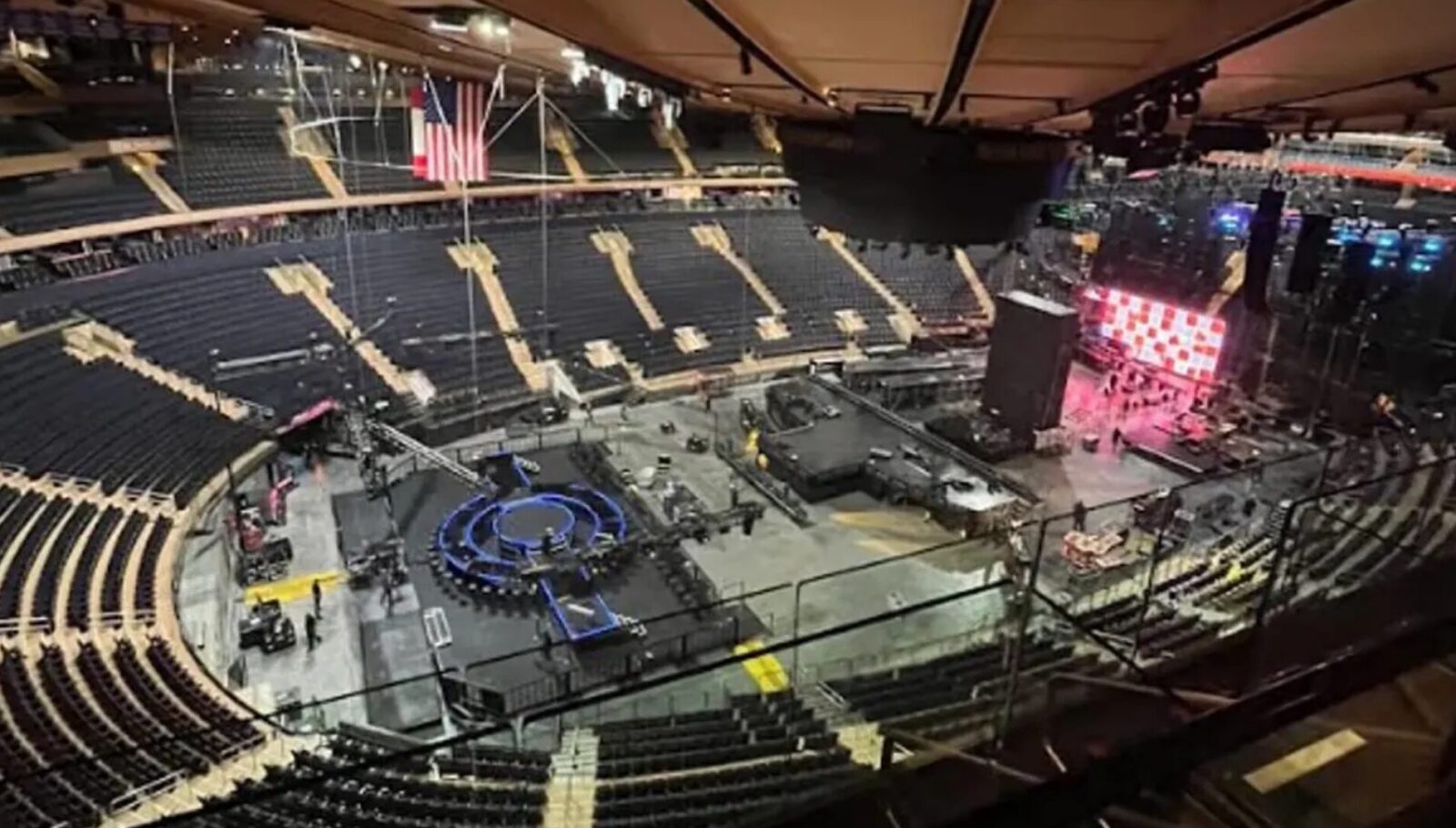
A 51-year-old man has died after falling from an elevated seating area during a concert at Madison Square Garden in New York. Less than a year earlier, a man in his 40s died after falling from the upper tier during an Oasis concert at Wembley Stadium in London.
The circumstances of the two incidents are different and it would be inappropriate to speculate on either while investigations continue. What struck me, however, was not the similarity of the incidents themselves but where they occurred.
Madison Square Garden and Wembley Stadium are not temporary venues. They are not inexperienced operators. These are two of the most recognised entertainment venues in the world. Between them they have hosted millions upon millions of patrons, thousands of events and some of the biggest artists, sporting fixtures and productions on the planet.
Yet despite all of that experience, two people have lost their lives following falls from spectator areas within the space of a year.
One of the challenges in safety is that we often focus on the hazards that are front of mind. In the events industry that usually means crowd management, severe weather, temporary structures, emergency planning, hostile vehicle mitigation, security screening and medical response. These are all important subjects because they have the potential to affect large numbers of people.
Falls from spectator areas rarely generate the same level of discussion.
Perhaps that is because most of us assume the risk has largely been solved. Modern venues are designed by engineers, built to standards and subjected to multiple layers of compliance and approval. Barriers are installed, sightlines are considered and access routes are carefully planned. The expectation is that the physical environment has already addressed the hazard.
The reality is often more complicated than that.
A venue can be compliant. A barrier can meet the required standard. An operator can have appropriate procedures in place. None of those things necessarily prevent every possible incident.
People do not always behave in the way designers expect. They stand on seats to get a better view. They lean over barriers to take photographs. They celebrate goals, songs and performances. They move with the crowd. They become distracted. They consume alcohol. Sometimes they simply make poor decisions.
The physical environment remains exactly the same, but human behaviour introduces variables that no design standard can fully eliminate.
The Wembley incident is particularly interesting from a risk management perspective because the coroner has reportedly requested a review of barrier safety and whether further action could be taken to prevent similar incidents in the future.
That does not mean the barriers were defective. It does not mean anybody failed in their duties. What it does demonstrate is an important principle that sits at the heart of safety management. Compliance should never be the end of the conversation.
Many of the safety improvements we now take for granted were introduced because somebody asked whether meeting the minimum requirement was enough. Seatbelts, crowd barriers, emergency lighting, smoke detection systems and countless other controls have evolved over time because incidents prompted industries to re-examine existing assumptions.
The events industry regularly reviews lessons from crowd crushes, weather-related incidents and security failures. We share findings, update procedures and improve guidance. Fatal falls from spectator areas occur far less frequently, but that should not prevent us from asking similar questions.
- Are there locations within venues that present greater risks than others?
- Do current barrier designs adequately reflect how patrons actually use spaces during concerts and sporting events?
- Are there opportunities to better identify and manage high-risk behaviours before an incident occurs?
- Most importantly, are we still examining this hazard with fresh eyes, or have we collectively assumed the problem has already been solved?
For those of us working in risk and safety, rare events often present the greatest challenge. Frequent incidents attract attention because they happen regularly. Rare incidents can quietly disappear from view because they occur so infrequently that they feel like anomalies.
The consequence, however, remains the same.
A person attends an event expecting to return home afterwards. Their family expects them to return home afterwards. When that does not happen, the fact that the event was rare provides little comfort.
The investigations into both incidents will ultimately determine what occurred and whether any lessons emerge. In the meantime, these tragedies serve as a reminder that risk management is not simply about the hazards we see every day. It is also about periodically revisiting the hazards we believe have already been addressed and asking whether there is still room to improve.
This article is based on publicly available information available at the time of writing, including media reports and official statements. Both incidents discussed remain subject to investigation, and the circumstances surrounding each event may become clearer as further information emerges. Nothing in this article should be interpreted as suggesting fault, liability or wrongdoing by any individual or organisation. The purpose of this article is to encourage discussion about risk management, venue design and safety within the events industry.
This article was originally published on Beaspoke Safety.
Photo courtesy of the author.
Originally from Manchester in the United Kingdom, Bea has spent more than 25 years working across the events industry in both the UK and Australia. Her career started in event operations and production, working on conferences, exhibitions, festivals, fashion events and major public gatherings before moving into safety and risk management. Along the way she worked with venues including Earls Court and Olympia in London, NEC in Birmingham and supported events ranging from art fairs and exhibitions through to large public festivals and community events.
After moving to Australia in 2004, Bea established herself as one of the country's most recognised event safety professionals, working with event organisers, councils, venues, suppliers and government agencies to help deliver safer and more resilient events.
Known for describing herself as the industry's professional Devil's Advocate, Bea is recognised for asking the difficult questions early, challenging assumptions and helping clients identify issues before they become problems. Her approach combines practical operational experience with formal safety qualifications, allowing her to bridge the gap that can sometimes exist between compliance requirements and the realities of delivering live events.
Through her writing and speaking, Bea explores the lessons that can be learned from incidents, disasters, popular culture and everyday experiences, making complex safety conversations accessible, practical and relevant for the wider events industry.
Editor's Note: At StageLync, an international platform for the performing arts, we celebrate the diversity of our writers' backgrounds. We recognize and support their choice to use either American or British English in their articles, respecting their individual preferences and origins. This policy allows us to embrace a wide range of linguistic expressions, enriching our content and reflecting the global nature of our community.
🎧 Join us on the StageLync Podcast for inspiring stories from the world of performing arts! Tune in to hear from the creative minds who bring magic to life, both onstage and behind the scenes. 🎙️ 👉 Listen now!
