Load-Out: Who Actually Knows What Everyone Else Is Doing?
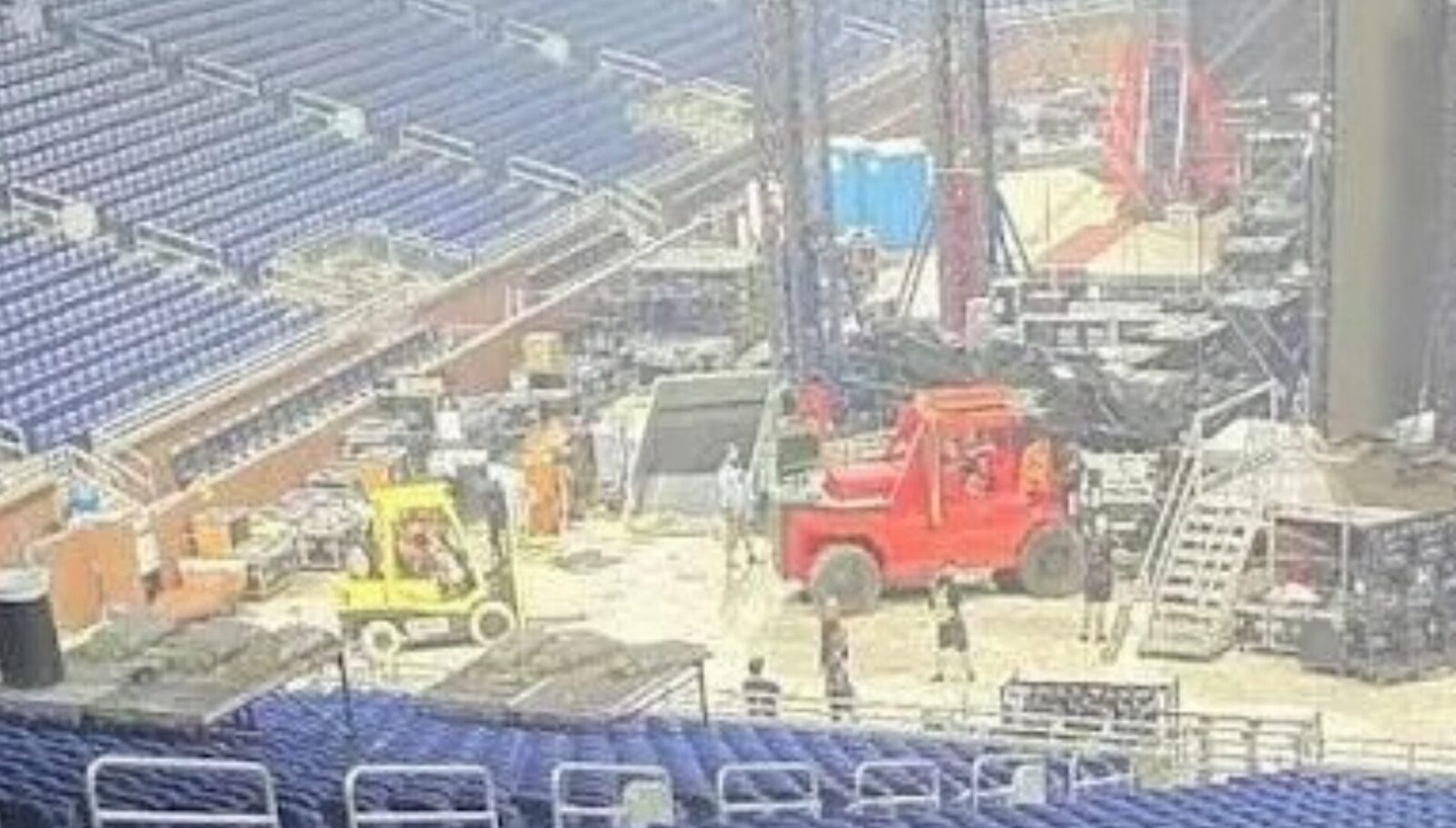
Six workers were taken to hospital following an incident during the load-out / bump out of Ed Sheeran’s concert at Ford Field in Detroit on August 29, 2026.
The incident happened during load-out, after the Ed Sheeran concert had finished and crews were dismantling the production and moving equipment out of the stadium.
At around 11 pm, an incident occurred in the stadium’s vehicle tunnel involving equipment being used during the load-out. Emergency dispatch audio reportedly described it as a “forklift injury accident”. Six workers were injured and taken to hospital, with two initially reported to be in a serious condition and four stable. Thankfully, none of the injuries were considered life-threatening.
Subsequent media reports have said that equipment lost control near a ramp in the vehicle tunnel. Footage from the aftermath appears to show a small buggy or golf-cart-type vehicle involved, with reports stating that a forklift struck a buggy carrying workers. Exactly what happened, however, is still being investigated.
Ford Field has commenced a review and is working with the relevant authorities and production partners. Until that investigation establishes what happened, there is little value in speculating about mechanical failure, operator actions, speed, the gradient of the tunnel or any of the other possible contributing factors.
What we can talk about is something our industry deals with at almost every major event: load / bump-out.
I have described bump-out and load-out as the Wild West of events when speaking about event safety before, because sometimes that is exactly what it feels like. The audience has gone, the show is finished and suddenly multiple contractors are trying to dismantle, pack and remove their part of the event, often within the same relatively small area and at the same time.
Production is dismantling equipment, forklifts and other mobile plant are moving, road cases are appearing everywhere, trucks are arriving or being loaded, cleaners may already be working through the site, security numbers can be reducing and people are walking between all of it trying to finish their own jobs. Everyone has their own task, their own crew, their own equipment and usually their own deadline for getting out.
It is also happening at the end of the event. For some people, that can mean they have already worked a long day. The show itself may have finished, but for the crew responsible for pulling it apart, there can still be hours of work ahead. People are tired, everyone wants to get finished and there can be pressure to get equipment packed and trucks on the road as quickly as possible.
That combination is why I think we need to look beyond whether each individual contractor has completed a risk assessment or toolbox talk for their own work. The bigger question is what tasks are happening across the entire load-out, where they are happening, when they are happening and whether the different contractors working alongside each other actually know what everyone else is doing.
Was there a toolbox talk involving the key contractors before load-out started? Not separate toolbox talks where each contractor discusses their own little piece of the operation with their own crew, but a proper coordination discussion between the people responsible for the different activities taking place across the site.
What are you doing? Where are you doing it? When are you starting? What plant are you using? Which routes do you need? Where are your trucks going? Where will your crew be walking? Where will your road cases be staged? And where are your activities going to cross over with somebody else’s?
These are the conversations I want happening before everyone starts moving.
It is quite possible for a contractor to have perfectly reasonable controls for operating a forklift and another contractor to have perfectly reasonable controls for moving their crew or equipment through the venue. Put both activities into the same loading dock or vehicle tunnel at the same time, however, and we potentially have a completely different risk that neither contractor’s individual assessment properly addresses.
That is where coordination between contractors becomes so important during load-out.
Sequencing is another part of it. Does everything genuinely need to happen at once simply because the show has finished? Could one activity wait twenty minutes while another is completed? Could a vehicle route temporarily become plant-only while a particular movement takes place? Could pedestrian access be redirected? Could trucks be held outside until a loading area is ready rather than adding another vehicle into an already congested space?
Then we need to consider the plant and vehicles themselves. Forklifts, telehandlers, buggies and other mobile equipment are commonplace during event builds and dismantles, but familiarity with them does not remove the risk. Pre-start inspections, brakes, warning devices, lights, tyres, visibility, maintenance, operator competency and whether the equipment is suitable for the environment all form part of managing those movements.
The environment itself can also change the risk considerably. A forklift operating across a flat arena floor is not necessarily dealing with the same conditions as one travelling through a loading dock, down a ramp or through a vehicle tunnel. Gradients, corners, blind spots, surface conditions, lighting, congestion and other vehicle movements all need to be considered.
The hierarchy of control should come into this as well. High-vis clothing, radios, spotters, reversing alarms and instructions to watch out for forklifts all have their place, but they should not automatically be where we start. If we can physically separate people and mobile plant, create dedicated routes, establish exclusion zones or sequence activities so conflicting movements are not occurring simultaneously, those options need to be considered.
Speed is another obvious issue around mobile plant, but even something as straightforward as telling operators to “drive slowly” needs more thought. What does slowly actually mean? Does everyone operating plant have the same interpretation? Are there site speed limits? Are they communicated and, importantly, are they actually being managed during load-out?
None of these questions tells us what caused the incident at Ford Field, and I am not suggesting that any of them did. The investigation needs to establish what happened there.
What the incident does give the rest of us is a reason to look at our own bump-out and load-out arrangements.
We spend an enormous amount of time planning how people will arrive at an event, how crowds will move, where queues will form, how emergency access will be maintained and how the event itself will operate. Then the audience leaves and, in some cases, the operational structure that existed during the event starts disappearing at exactly the same time as forklifts, trucks, buggies, road cases and hundreds of workers start moving.
A bump-out plan cannot simply be a finish time on a production schedule and an instruction for contractors to remove their equipment. We need to understand who is doing what, where they are doing it, what plant and vehicles they are using, who else needs that same space and whether all of those activities can safely happen together.
Perhaps it is time we stopped accepting the Wild West nature of load-out / bump out as simply part of working in events and started asking whether we are actually coordinating it properly.
This article is based on publicly available information available at the time of writing. The incident at Ford Field remains under review and its cause has not been established. References to mobile plant, contractor coordination, fatigue, traffic management and load-out operations are general event safety commentary and should not be interpreted as findings about the cause of this incident.
This article was originally published on Bespoke.
Photo courtesy of the author.

Originally from Manchester in the United Kingdom, Bea has spent more than 25 years working across the events industry in both the UK and Australia. Her career started in event operations and production, working on conferences, exhibitions, festivals, fashion events and major public gatherings before moving into safety and risk management. Along the way she worked with venues including Earls Court and Olympia in London, NEC in Birmingham and supported events ranging from art fairs and exhibitions through to large public festivals and community events.
After moving to Australia in 2004, Bea established herself as one of the country's most recognised event safety professionals, working with event organisers, councils, venues, suppliers and government agencies to help deliver safer and more resilient events.
Known for describing herself as the industry's professional Devil's Advocate, Bea is recognised for asking the difficult questions early, challenging assumptions and helping clients identify issues before they become problems. Her approach combines practical operational experience with formal safety qualifications, allowing her to bridge the gap that can sometimes exist between compliance requirements and the realities of delivering live events.
Through her writing and speaking, Bea explores the lessons that can be learned from incidents, disasters, popular culture and everyday experiences, making complex safety conversations accessible, practical and relevant for the wider events industry.
Editor's Note: At StageLync, an international platform for the performing arts, we celebrate the diversity of our writers' backgrounds. We recognize and support their choice to use either American or British English in their articles, respecting their individual preferences and origins. This policy allows us to embrace a wide range of linguistic expressions, enriching our content and reflecting the global nature of our community.
🎧 Join us on the StageLync Podcast for inspiring stories from the world of performing arts! Tune in to hear from the creative minds who bring magic to life, both onstage and behind the scenes. 🎙️ 👉 Listen now!