When an Accident Is Ruled an Accident, What Do We Learn From It?
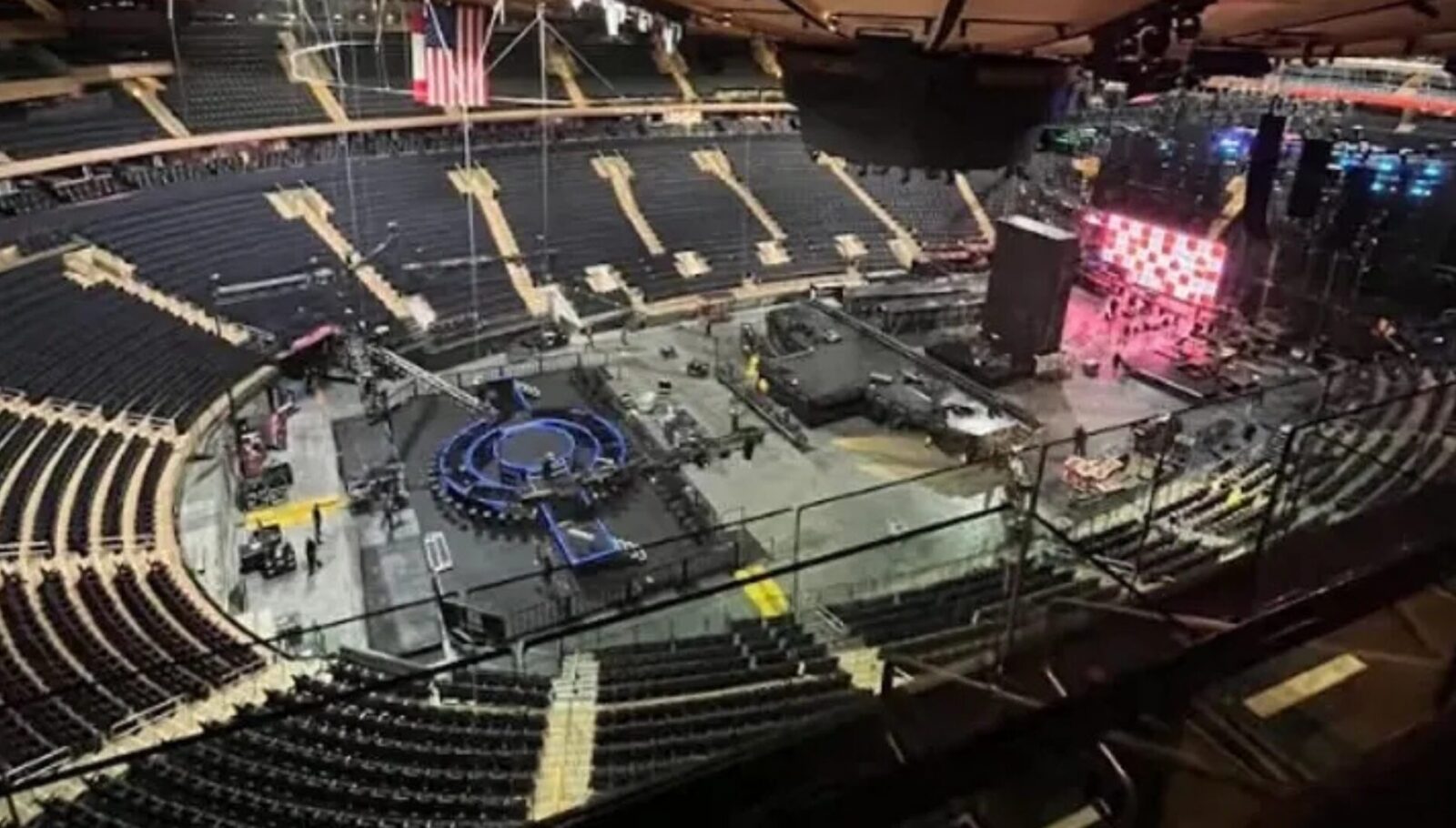
A couple of months ago, I wrote about the death of 51-year-old Paul Kueker, who fell from an elevated seating area at Madison Square Garden during a Goose concert on 20 June (read article here). He had gone to the concert with his wife, Kristen, as they celebrated their upcoming 25th wedding anniversary. He left his seat to go to the bathroom and never came back.
When an Accident Is Ruled an Accident, What Do We Learn From It?
When I wrote about the incident previously, there was very little confirmed information about exactly what had happened. There were plenty of reports and plenty of speculation, but not enough information to start making judgements about why Paul fell or whether anything could have prevented it. What interested me then, and still interests me now, is the wider issue of falls from elevated spectator areas and whether we give that risk enough consideration when we are looking at safety in permanent venues.
We now have further information from the New York City Office of the Chief Medical Examiner, which has confirmed that Paul died from multiple blunt impact injuries and that his death was accidental. Understandably, that has resulted in headlines reporting that his “cause of death” has been revealed, but there is an important distinction here because knowing the medical cause of Paul’s death and knowing what caused him to fall are not the same thing.
There have also been witness reports that Paul appeared intoxicated and that he climbed over a four-foot-high plexiglass barrier in an area away from where he had originally been sitting. At the time of the latest reporting, the NYPD had not confirmed whether alcohol was involved, so I don’t think we can simply state that intoxication caused his behaviour or contributed to his death.
If it is eventually established that Paul deliberately climbed over the barrier, that clearly needs to form part of understanding what happened. It also raises a more difficult question for those of us working in risk and safety because anyone who has worked at events knows that people don’t always behave in the way we expect or would like them to. People stand on seats, climb structures, sit on barriers, take shortcuts and enter areas they shouldn’t. Sometimes alcohol is involved and sometimes it isn’t. Sometimes there seems to be absolutely no sensible explanation for why somebody decided to do something.
There has to be a reasonable limit to how far we design environments around that behaviour. We cannot make every venue impossible to climb, remove every elevated position or build barriers so high that spectators feel as though they are watching an event from inside a cage. Individuals also have responsibility for their own actions, and risk management cannot become an expectation that an event organiser or venue operator must somehow anticipate and physically prevent every possible poor decision a person might make.
At the same time, foreseeable behaviour does form part of risk management, particularly when we know that certain behaviours regularly occur in event environments. If somebody has been able to climb over a barrier in an elevated spectator area where the consequence on the other side is a substantial fall, then following a fatality it is reasonable to look at what happened and consider whether there is anything that could reduce the chance of it happening again.
That does not mean the barrier was inadequate, that Madison Square Garden did anything wrong or that somebody should necessarily have been standing there to stop Paul. We don’t currently have the information to reach any of those conclusions. What we can reasonably ask is whether people had climbed or attempted to climb that barrier previously, whether there is anything about its design or location that makes doing so relatively easy, whether patron behaviour in that area had previously caused concern and whether the combination of an elevated area, alcohol consumption and the way people move around the venue creates a risk that needs any further consideration.
There may be perfectly reasonable answers to all of those questions and, after the circumstances have been properly examined, the conclusion may be that there was nothing reasonably practicable that could have prevented Paul’s fall. That is a perfectly legitimate outcome of an investigation. The important part is that the conclusion comes after looking at what happened rather than simply assuming that because the death has been classified as accidental there is nothing further to consider.
The word “accident” can be problematic in risk and safety conversations because in everyday language it can sound as though something simply happened and nobody could have done anything about it. Yet we investigate accidental incidents constantly. A worker can accidentally fall from height and we still examine the edge protection, access arrangements, work methods and supervision. A pedestrian can accidentally be struck by a vehicle and we still look at the traffic management arrangements. A fire can start accidentally and we still look at how it started, how quickly it was detected and whether the controls worked as intended.
The same principle applies to a fatal fall at a concert. The fact that nobody intended for Paul to fall does not tell us whether there is anything useful to learn from the circumstances that led up to it.
In my previous article about Paul’s death, I questioned whether falls from spectator areas receive enough attention because permanent venues have already been designed, engineered, approved and operated, sometimes for decades. It is understandable that we place a considerable amount of confidence in those processes. If a barrier meets the relevant requirements and the building has been approved for its intended use, an event organiser is hardly going to arrive at the venue and start conducting their own engineering assessment of every balcony and balustrade.
However, incidents give us information about how environments actually perform when thousands of real people use them. That information can include behaviours that perhaps weren’t anticipated when something was designed, changes in the way a space is used, or circumstances that only become apparent once something goes wrong. Looking again after an incident doesn’t mean admitting that the original design was wrong or that somebody was negligent. It is simply part of learning from what has actually happened.
Paul’s death also follows another fatal fall from an upper tier during an Oasis concert at Wembley Stadium last year. These were different incidents, in different venues and with different circumstances, so I don’t think we can legitimately draw a line between the two and suggest there is some common failure without evidence. What we can say is that we have now seen two high-profile deaths involving falls from elevated spectator areas, and that should be enough for the events and venue industry to at least have a conversation about whether there is anything more we should be considering.
That conversation might ultimately confirm that existing standards, barriers and operational controls are appropriate. It might identify particular locations where additional monitoring would be useful, or raise questions about barrier design, staffing, alcohol management or how we respond when we see patrons climbing or sitting where they shouldn’t. It may also establish that Paul’s actions were sufficiently unusual that there was nothing a venue could reasonably have been expected to do differently.
Paul went to a concert with his wife to celebrate nearly 25 years of marriage and should have gone home with her that night. We now know that the Medical Examiner has classified his death as accidental and we know the injuries that caused his death. What we still don’t fully know is what led to him going over that barrier, and until those circumstances are understood, I don’t think the word “accident” should be treated as the end of the safety discussion.
This article is based on publicly available information at the time of writing. The New York City Office of the Chief Medical Examiner has ruled Paul Kueker’s death accidental. This article does not allege negligence, fault or legal liability by Madison Square Garden, the event organisers, performers or any other party. Witness reports concerning Paul’s behaviour and possible intoxication remain reported accounts and should not be treated as established fact unless confirmed by the relevant authorities. The purpose of this article is to consider the broader event and venue safety issues arising from the incident.
This article was originally published at https://beaspoke.com.au/
Photo courtesy of the author.
Originally from Manchester in the United Kingdom, Bea has spent more than 25 years working across the events industry in both the UK and Australia. Her career started in event operations and production, working on conferences, exhibitions, festivals, fashion events and major public gatherings before moving into safety and risk management. Along the way she worked with venues including Earls Court and Olympia in London, NEC in Birmingham and supported events ranging from art fairs and exhibitions through to large public festivals and community events.
After moving to Australia in 2004, Bea established herself as one of the country's most recognised event safety professionals, working with event organisers, councils, venues, suppliers and government agencies to help deliver safer and more resilient events.
Known for describing herself as the industry's professional Devil's Advocate, Bea is recognised for asking the difficult questions early, challenging assumptions and helping clients identify issues before they become problems. Her approach combines practical operational experience with formal safety qualifications, allowing her to bridge the gap that can sometimes exist between compliance requirements and the realities of delivering live events.
Through her writing and speaking, Bea explores the lessons that can be learned from incidents, disasters, popular culture and everyday experiences, making complex safety conversations accessible, practical and relevant for the wider events industry.
Editor's Note: At StageLync, an international platform for the performing arts, we celebrate the diversity of our writers' backgrounds. We recognize and support their choice to use either American or British English in their articles, respecting their individual preferences and origins. This policy allows us to embrace a wide range of linguistic expressions, enriching our content and reflecting the global nature of our community.
🎧 Join us on the StageLync Podcast for inspiring stories from the world of performing arts! Tune in to hear from the creative minds who bring magic to life, both onstage and behind the scenes. 🎙️ 👉 Listen now!