What Casting Directors Keep Saying: Are Performers Really Listening?
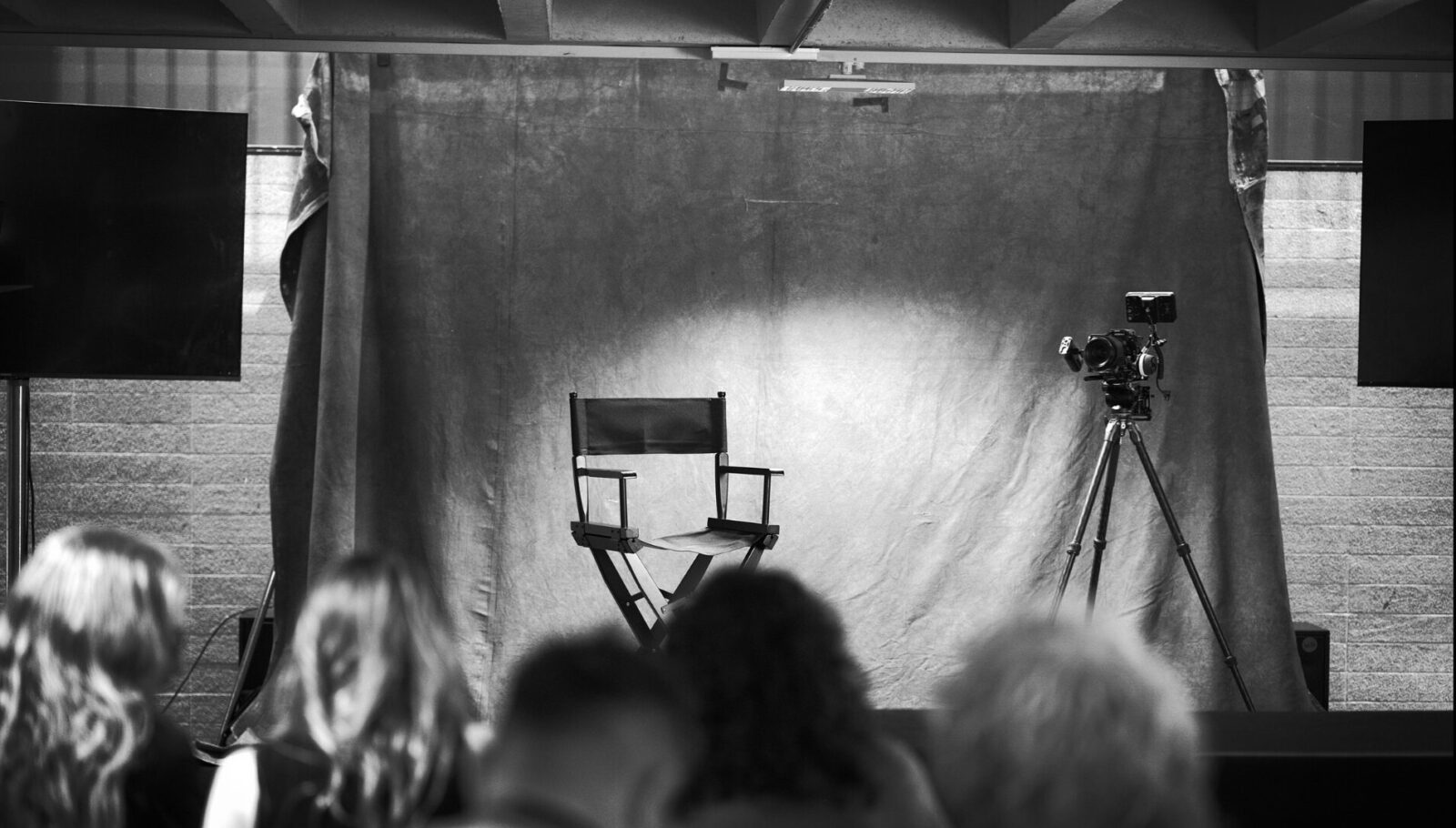
There is a particular irony within the performing arts industry. We spend considerable time encouraging performers to listen, respond authentically and remain open to the unexpected, yet when it comes to understanding the casting process itself, we can become remarkably preoccupied with finding the correct answer.
What does a casting director want? How can I make my audition stand out? Should I make a bold interpretative choice? Is my appearance right for the role? What can I do to guarantee that I get noticed? These are understandable questions, particularly in an industry where opportunities are competitive and feedback is often limited. However, through my work as an actor, drama coach and host of The Drama Coach Podcast, I have become increasingly interested in whether our preoccupation with securing the next opportunity sometimes distracts us from the fundamental principles of good performance.
The casting professionals I have invited onto the podcast offer valuable perspectives from the other side of the audition process. Conversations with Tree Petts, Casper Black, Rose Rosen and Liyanne Marie have provided opportunities to examine casting from different professional contexts and reflect on what performers can learn from those responsible for selecting them.
While different forms of performance operate within different requirements, considering these approaches alongside one another raises some important questions about the relationship between authenticity, preparation and professional suitability.
Perhaps the most useful question for performers is not simply what casting directors want, but whether we are properly understanding what the casting process is designed to achieve.
One of the most damaging misconceptions surrounding auditions is the idea that casting decisions offer an objective assessment of a performer’s talent.
From an educational perspective, this is particularly interesting. Much of our formal experience of assessment, particularly throughout school and training, is based on demonstrating competence against established criteria. We complete a task, receive an evaluation and, understandably, interpret the result as evidence of our ability.
Auditions do not operate in quite the same way.
A casting director is not necessarily attempting to identify the most talented performer in the room. They are contributing to a much broader creative and practical process, identifying individuals who may be suitable for a particular project at a particular moment.
That distinction is enormously important.
A performer might deliver a technically accomplished, emotionally convincing audition and still not be selected. The reason may have little to do with their ability. Physical characteristics, relationships between characters, the balance of an ensemble, production requirements, creative direction, availability and numerous other considerations can influence a final decision.
Understanding this distinction can significantly influence how those in the performing arts experience auditions. When every unsuccessful casting is interpreted as a personal failure, it becomes increasingly difficult to maintain confidence, curiosity and enjoyment.
As a drama coach, I regularly encourage performers to reconsider the language they use around auditions. Rather than asking whether someone passed or failed, we might consider whether they prepared effectively, engaged with the material, made purposeful choices and responded appropriately to the creative task.
These are aspects of the audition process that performers can influence. The final casting decision, however, lies beyond their control.
Recognising that difference can help soften the disappointment of rejection, while supporting a more accurate understanding of professional selection and a healthier relationship with the audition process.
YOUR NEXT OPPORTUNITY STARTS WITH BEING SEEN.
Make it easier for casting directors and recruiters to discover your talent. Create or update your free StageLync professional profile to showcase your skills, experience, and work.
Create or Update Your Profile →
The concept of authenticity is particularly interesting when examining the relationship between technical preparation and convincing performance.
Actors spend years developing technical skills intended to support truthful behaviour within imagined circumstances. We study objectives, character motivation, physical expression, vocal communication and emotional availability. We learn to analyse text and construct believable relationships.
Across the performing arts, considerable training is devoted to developing the control and understanding that allow expression to become precise, repeatable and communicative.
Yet a thoroughly prepared performance can sometimes lack the immediacy or spontaneity that makes an audience feel something is happening in the moment.
This invites us to examine the relationship between technique and visible effort.
An actor can become so occupied with demonstrating their understanding of a character that the performance begins to reveal its own construction. Instead of appearing to respond spontaneously, the performer appears to be presenting a carefully organised series of acting choices.
A singer may become so focused on producing a particular sound that the communication of the song recedes. A dancer may execute the choreography accurately while allowing little room for responsiveness to the music or other performers.
The difference can be subtle, but significant.
Authenticity does not necessarily mean underplaying, avoiding emotional expression or behaving as though nothing matters. In acting, it means that behaviour emerges convincingly from the circumstances rather than appearing imposed upon them. More broadly, it concerns the relationship between what a performer is doing and what they are communicating.
This is where I find the principles of Sanford Meisner particularly useful. His emphasis on attention, listening and truthful response offers a valuable reminder that performance does not exist solely within the actor’s prepared interpretation. It develops through interaction.
Similarly, Stanislavski’s exploration of objectives and given circumstances provides a foundation for creating behaviour that is purposeful rather than merely demonstrative.
The challenge for performers is to develop sufficient technical understanding that they no longer need to advertise the technique itself.
In other words, preparation should support spontaneity rather than eliminate it.
There is a temptation, particularly among conscientious or highly trained performers, to approach auditions as opportunities to demonstrate how thoroughly they have prepared.
Preparation is unquestionably valuable. Understanding the material, exploring its context and considering what is being communicated all contribute to a performer’s ability to make informed choices. For an actor, this may involve identifying objectives and examining the relationships within a scene; for a singer or dancer, the preparation will also involve the particular musical, vocal or physical demands of the work.
However, preparation becomes less useful when it develops into rigidity.
An actor who has rehearsed a scene so extensively that every movement, pause and emotional response has become fixed may struggle when asked to approach the material differently. The same difficulty can arise when a singer or dancer becomes attached to one expressive interpretation.
This is particularly relevant to the audition environment, where creative teams may wish to explore alternative interpretations, shifts in tone or adjustments to the relationship between performers.
READY FOR YOUR NEXT AUDITION?
Discover 150+ new performing arts jobs and auditions every week on StageLync. Get PREMIUM access to explore opportunities, view application details, and receive personalized job alerts.
Get PREMIUM Access →
In my own coaching, I often encourage actors to distinguish between knowing what their character wants and deciding in advance exactly how that desire must be expressed.
An objective provides direction. It does not prescribe every aspect of behaviour.
For example, a character attempting to persuade another person to stay might employ reassurance, humour, confrontation, emotional vulnerability or even deliberate indifference. The objective may remain consistent while the playable actions change.
This flexibility allows an actor to remain creatively available. The broader principle applies across disciplines: secure preparation can provide the freedom to explore rather than an obligation to reproduce.
It also offers a more useful way to think about taking direction.
An adjustment in an audition is not necessarily evidence that the original interpretation was wrong. It may simply be an opportunity for the creative team to explore another possibility.
When performers become overly attached to their initial choices, they risk treating direction as criticism rather than collaboration.
A more productive approach is to prepare deeply enough to understand the material, but remain sufficiently open to discover something new within it.
Conversations about casting also demonstrate why performers need to understand the particular demands of the medium in which they are working.
Different performance contexts – from screen drama and commercials to musical theatre, physical theatre, circus and immersive work – place different demands on performers.
A commercial casting may involve conveying a recognisable personality or relationship within a very limited period. A television drama may demand greater narrative and emotional specificity within an established fictional world. Theatre may require performers to sustain character, physical communication and vocal clarity across a live performance. Singing and dance auditions may explore particular technical requirements alongside interpretation, stylistic understanding and the ability to work within an ensemble.
Even within these forms, the requirements of individual productions vary considerably.
Advice about making bold choices or standing out becomes less useful when it is separated from the work being cast. A choice has value because it serves the material and responds to the creative task. Understanding that task is itself part of professional preparation.
The conversations I have had through the podcast have encouraged me to think about auditions as an extension of performance practice. The same questions remain relevant: how well do we understand the material, where is our attention, and how available are we to what happens next?
Technical accomplishment, artistic judgement and responsiveness work together. Preparation gives an interpretation substance; collaboration allows it to develop.
For those working in the performing arts, the challenge is to bring both into the audition process while recognising the limits of what any individual casting decision can tell us. The outcome matters professionally, but it cannot provide a complete account of the performer or the quality of their work.
To learn more about Lisa’s work and coaching services, visit The Drama Coach,
or listen to her practical insights and conversations with industry professionals on The Drama Coach Podcast.
Main image courtesy of Miguel A Amutio on Unsplash

Editor's Note: At StageLync, an international platform for the performing arts, we celebrate the diversity of our writers' backgrounds. We recognize and support their choice to use either American or British English in their articles, respecting their individual preferences and origins. This policy allows us to embrace a wide range of linguistic expressions, enriching our content and reflecting the global nature of our community.
🎧 Join us on the StageLync Podcast for inspiring stories from the world of performing arts! Tune in to hear from the creative minds who bring magic to life, both onstage and behind the scenes. 🎙️ 👉 Listen now!