How the Performing Arts Sector Evolved in 2025
As 2025 draws to a close, the performing arts sector stands at a pivotal moment of transformation. Financial pressure, changing audience behavior, rapid technological advancement, and rising expectations around cultural relevance all collided this year, making it clear that traditional systems can no longer carry the field forward. Old structures are fading, while the tools and ideas that will replace them are still emerging. The choices we make now will influence how the performing arts connect, create, and sustain themselves for decades to come.
At StageLync, we are committed to helping build that future. Our team is working to upgrade the platform to strengthen visibility, connection, and opportunity for artists and professionals, providing a digital infrastructure designed for the evolving performing arts ecosystem.
Below is a look at six of the major themes that have defined 2025.
1. Funding and the Freelance Crisis
Financial instability remained one of the most urgent issues this year. Rising production costs, shrinking public funding, and audience attendance that has not fully stabilized since the pandemic forced organizations to experiment with shared resources, co-productions, and new operating models.
Meanwhile, the freelance workforce (the backbone of the performing arts) continued to demand lasting structural change. Compensation standards, fair per diems, transparent contracts, and safe working conditions are now recognized as essential, not aspirational. Advocacy is shifting to implementation, signaling a deeper rebuilding of how the sector supports its people.
On the StageLync Podcast, arts advocate Carson Elrod emphasized that the future of the creative economy depends on collective action. He co-founded Be An #ArtsHero during the pandemic to push Congress to recognize arts workers as essential to the US economy—a fight that remains urgent today. (StageLync Podcast Ep. 52.)
2. AI in the Arts: Assistive or Generative?
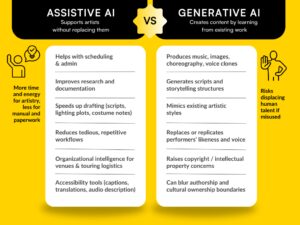
Artificial intelligence quickly became one of the most debated forces shaping the performing arts in 2025. What emerged clearly this year is the critical difference between assistive AI and generative AI, a distinction that now guides much of the conversation. Assistive AI supports artists behind the scenes: scheduling, research, transcription, visual mock-ups, and other tasks that streamline production while firmly keeping creative control in human hands. Generative AI, by contrast, produces entirely new content by learning from vast datasets of human-made work and raises urgent questions about authorship, consent, and the unauthorized replication of a performer’s likeness, voice, or artistic style.
While many welcome assistive tools as valuable accelerators of creativity, generative systems continue to stir anxiety across the sector. At the heart of the debate lies a profound question: If a machine produces something without human consciousness behind it… can it truly be called art?
StageLync co-hosted an AI panel at the Festival Mondial du Cirque de Demain this year, where artists, theorists, and technologists aligned on one core principle: innovation can strengthen the arts, but human imagination must remain at the center. As we look toward 2026, the challenge is no longer defining the difference, but ensuring that boundaries are respected and creativity remains human-led in practice.
3. Diversity, Equity, Inclusion
Diversity, equity, and inclusion took very different paths around the world in 2025. In the United States, the year began with sweeping federal rollbacks that dismantled decades of institutional equity work. In January the Trump administration’s executive order eliminated DEI offices, programs, and policies across the federal government, while additional actions restricted gender-identity recognition, reduced LGBTQ+ protections, and removed nondiscrimination requirements in key public services. The impact reached into the performing arts: funding attached to inclusion initiatives has shrunk, hiring pipelines have weakened, and already-fragile organizations have fewer tools to support underrepresented artists. Marginalized creators, especially LGBTQ+ artists and artists of color, are feeling increased vulnerability as legal protections and institutional support recede.
Yet globally, the story was not uniform. Some countries continued to strengthen protections and ensure access to cultural participation. In Norway, for example, workplace inclusion is reinforced by national law, social welfare structures, and gender-balanced governance. In Canada, major arts presenters and festivals maintain inclusive programming as a core cultural value, reinforcing representation in leadership and onstage storytelling. These regions demonstrate that progress is possible when inclusion is treated not as a trend, but as a structural commitment.
Throughout the year, the StageLync Podcast featured several conversations about equity, including a powerful episode with Carmen Morgan, founder of artEquity. Carmen reminded us that the arts remain one of the most vital engines for cultural change: they move hearts, build community, and sustain hope. As she emphasized, the work ahead requires leadership rooted in dignity and collective care, especially in a moment when equity is advancing in some places and under threat in others. (StageLync Podcast Ep. 40.)
4. Mental Health, Wellbeing, and Safer Workplaces
In 2025, the performing arts world kept the spotlight on the wellbeing of its workforce. Burnout remains widespread in the performing arts. Long production runs, intense touring, and emotionally demanding content continue to take a toll, and artists are increasingly clear: a good job must protect wellbeing, not jeopardize it.
This year marked a decisive shift toward psychological and physical safety, especially in work involving intimacy, trauma, nudity, or cultural identities. Consent-based communication, trauma-informed rehearsal processes, and professional intimacy direction are now becoming standard practice.
The industry is also beginning to address the long-standing challenge of balancing family and career, with more companies offering childcare stipends, family-friendly accommodations, and flexible scheduling: from the Parent Artist Advocacy League’s national childcare grants and caregiver support programs in the United States, to more than 80 UK organizations now committed to the PiPA Pledge to improve working conditions for parents and caregivers.
Lisa Hopkins, with 25+ years in the arts and coaching, has become a leading voice in mental health and wellbeing on StageLync. She offers practical insight on resilience, balance, and emotional sustainability for creatives. Her articles encourage artists to protect their energy, nurture their mental health, and build careers rooted in personal power and longevity.
5. The Changing Audience
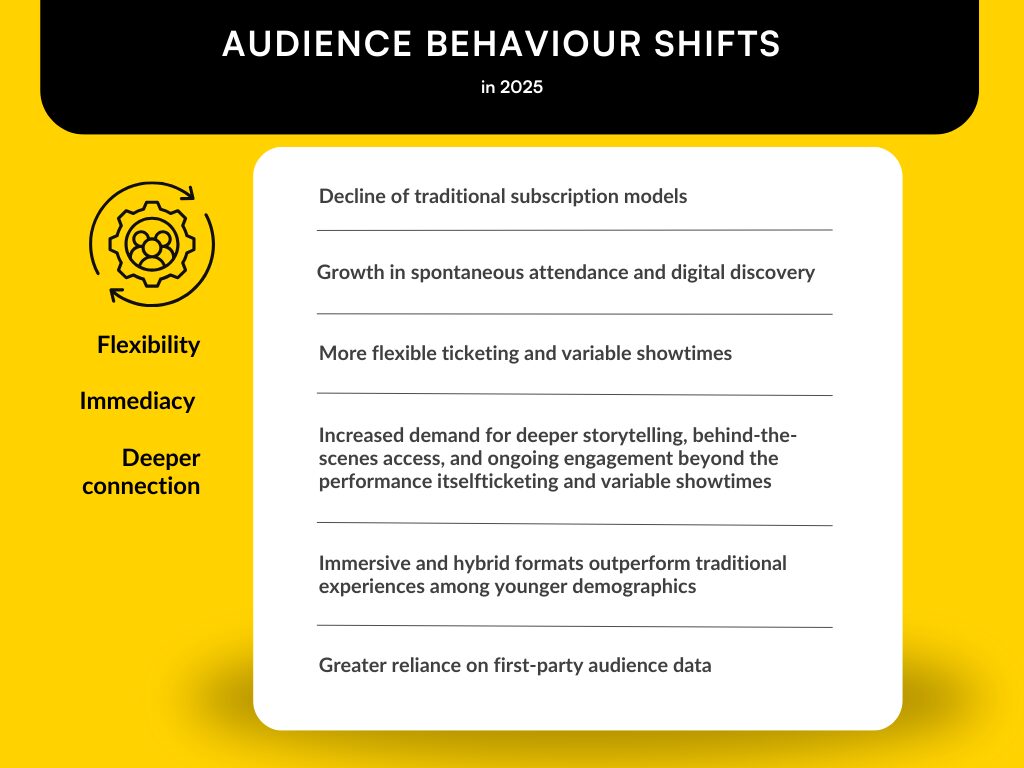
Audience behavior has continued to shift across the performing arts sector in 2025, reshaping how organizations build relationships, market shows, and engage communities. Today’s audiences want more than a ticketed experience, they seek connection, context, and continued dialogue. Engagement now begins long before a purchase, with audiences expecting digital previews, detailed information, and behind-the-scenes storytelling that builds anticipation. Traditional subscription models are declining, replaced by real-time discovery, spontaneous decision-making, and flexible ticketing. As social media targeting becomes less reliable, venues are prioritizing first-party audience data, dynamic pricing, and direct sales that strengthen long-term loyalty.
Younger audiences, especially, are driving demand for immersive, interactive, and hybrid performance formats, while older demographics have not fully returned to pre-pandemic attendance levels. This has pushed presenters to rethink accessibility, diversify entry points, and build ongoing digital touchpoints that invite audiences into a community, not just a single night out.
On the StageLync Podcast, cultural strategist Peter Kalal, Ph.D., described this moment as a cultural reset. Digital overload has created a hunger for shared, meaningful, human experiences. He urges institutions to invite audiences into the narrative, like sports fandom, where belonging and identity drive loyalty. (StageLync Podcast Ep. 54.)
6. The Rise of Circus, Physical Theatre, and Multidisciplinary Shows
And last but not least, 2025 marked a major leap forward for circus, physical theatre, and multidisciplinary performance, a trend especially close to StageLync’s heart given our roots in CircusTalk. What was once perceived as niche entertainment is increasingly recognized as one of the most inventive and boundary-pushing areas of the performing arts.
Chamäleon Berlin’s artistic director Anke Politz shared: “Contemporary circus has become a vast meadow where a lot is growing. …Everything is richer and more diverse. Not in the monetary sense, but in terms of content.” (Interview by Daniel Burrow)
Yaron Lifschitz, Artistic Director of Circa and 2025 ISPA honoree, added that circus is now deeply integrated with opera, theatre, and other art forms, and audiences are hungry for high-impact, experience-driven productions. (StageLync Podcast Ep. 33)
Globally, there are still only a handful of venues exclusively dedicated to circus and physical theatre, such as TOHU in Montréal, and Chamäleon Theatre Berlin. Yet more presenters are now integrating circus into their seasons thanks to the persistent advocacy and field-building efforts of circus leaders, who have spent years educating the sector and demystifying a discipline long misunderstood.
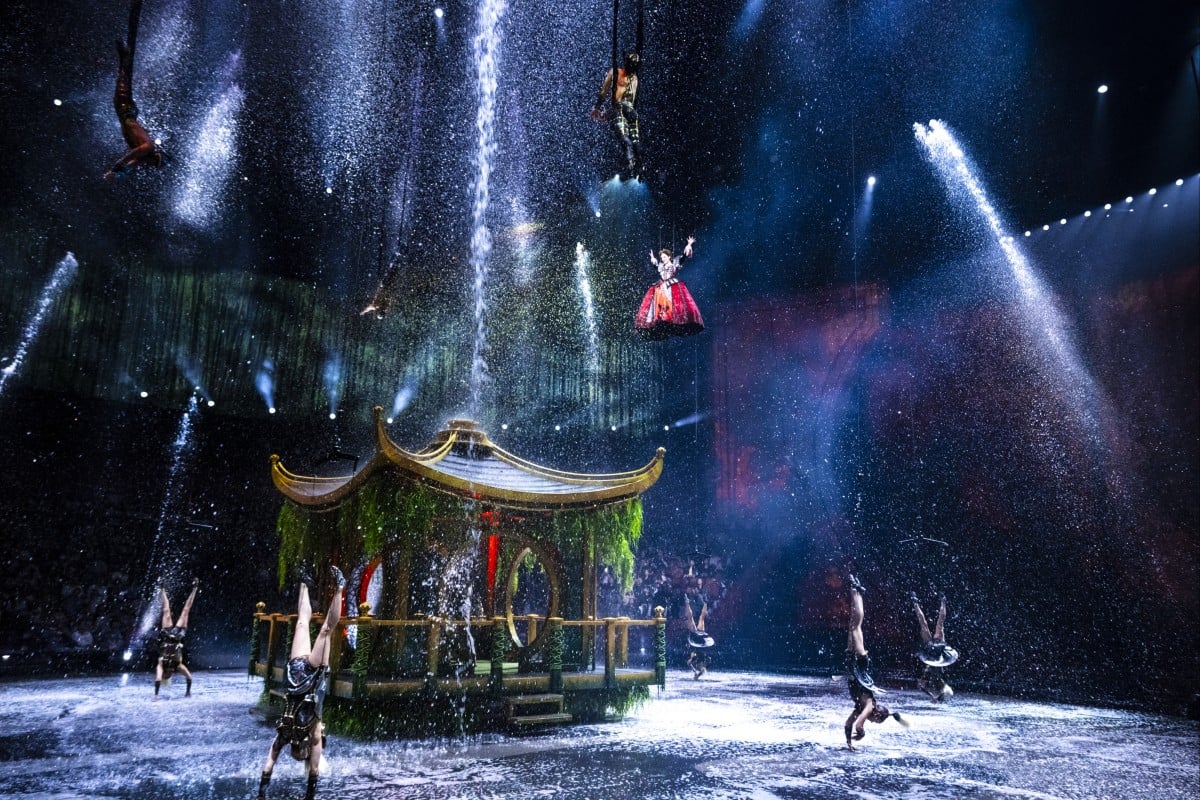
This year also saw circus take center stage in major commercial productions. Franco Dragone’s iconic show, The House of Dancing Water reopened in Macao, driving visitors and generating revenues to China’s biggest entertainment hub. In New York City, Water for Elephants opened on Broadway to critical acclaim, but sadly closed by the end of the year. In London, Come Alive! The Greatest Showman Circus Spectacular premiered in a purpose-built Big Top at the Empress Museum and continues to draw large audiences. On the StageLync Podcast, Jack Marsh, circus consultant for the show, spoke about the joyful challenge of blending circus with traditional musical theatre and the powerful magic that results. (StageLync Podcast Ep. 38.)
Multidisciplinary creation has become the norm: circus fused with symphony and opera, narrative works shaped by live motion-tracking, and AI-enhanced environments. Audiences are embracing circus not only for spectacular physicality but as a deeply expressive, emotionally resonant art form that reveals what live performance can accomplish at its boldest.
In many ways, circus is becoming the art form of the future: innovative, diverse, globally relevant, and profoundly human.
2025 was a year defined by transitions. Yet despite significant challenges, the sector showed remarkable innovation and resilience. Beneath every story this year lies the same heartbeat: community, creativity, and an unwavering belief in the power of live experience.
At StageLync, 2025 was a year of focused, behind-the-scenes preparation. My co-founder Anna Robb and I remain driven by a vision of a thriving global ecosystem where performing arts professionals are seen, connected, and supported to grow.
In 2026, we are excited to launch a renewed StageLync platform designed to showcase your credits, highlight your craft, amplify opportunity, and build sustainable careers. We cannot wait to take this next leap with you.
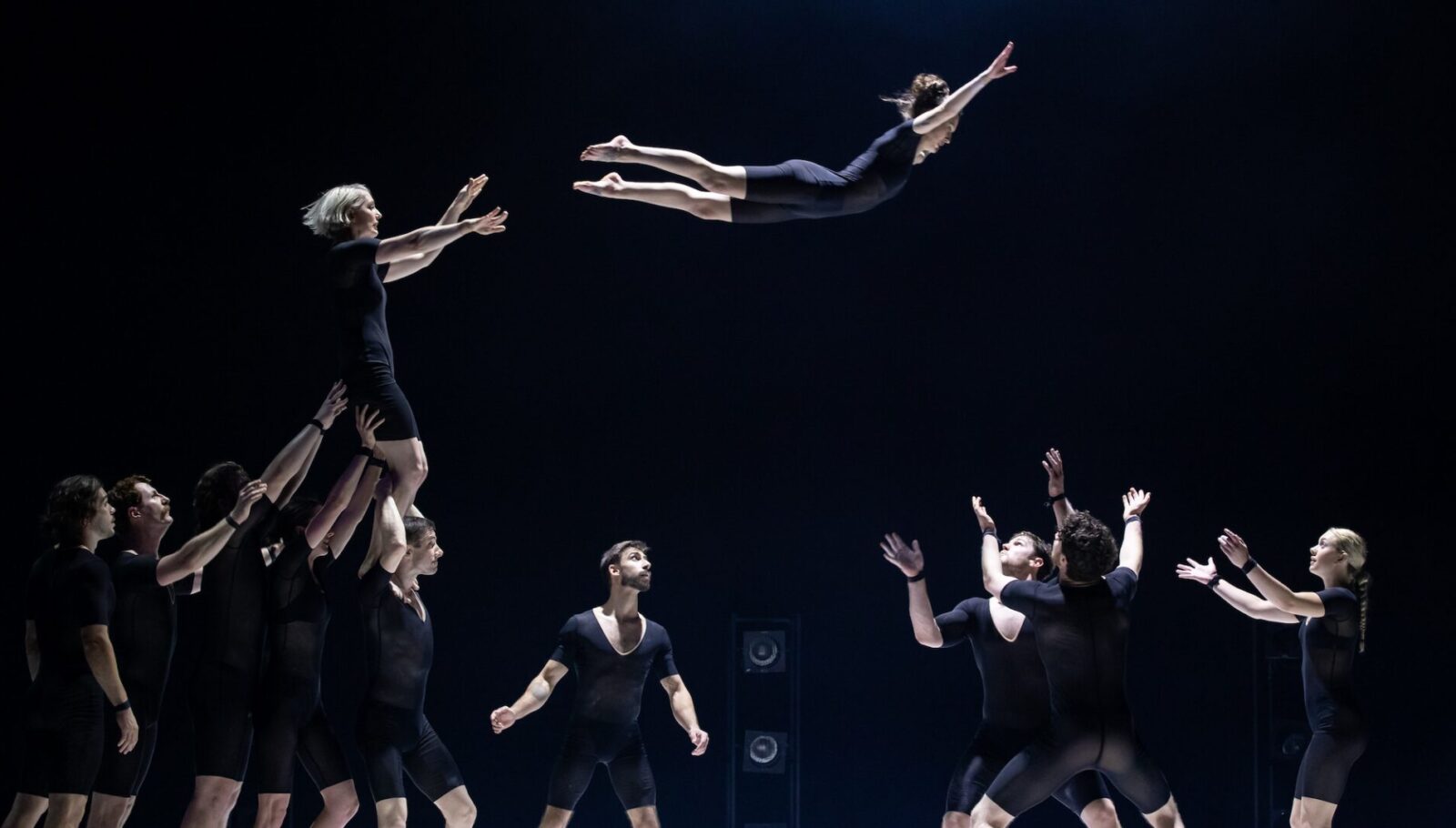
Main image: Circa - Humans2.0. Photo by David Kelly

Editor's Note: At StageLync, an international platform for the performing arts, we celebrate the diversity of our writers' backgrounds. We recognize and support their choice to use either American or British English in their articles, respecting their individual preferences and origins. This policy allows us to embrace a wide range of linguistic expressions, enriching our content and reflecting the global nature of our community.
🎧 Join us on the StageLync Podcast for inspiring stories from the world of performing arts! Tune in to hear from the creative minds who bring magic to life, both onstage and behind the scenes. 🎙️ 👉 Listen now!
