Every Actor Needs an Ego
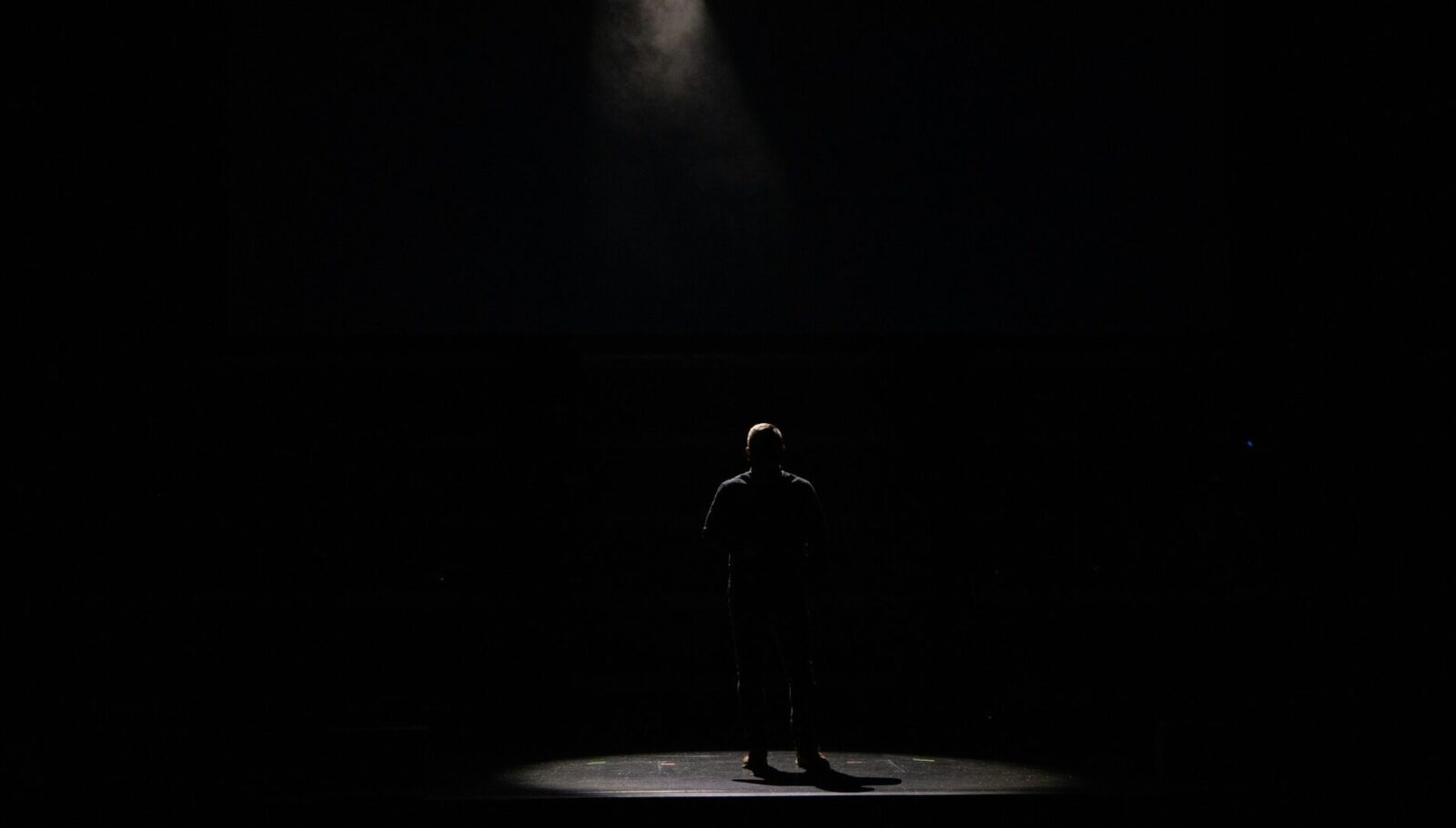
Applause is one of the sweetest sounds to any actor. The adulation and recognition from an audience can be quite intoxicating, especially on opening nights. And we as actors always bow as a sign of gratitude and, dare I say, humility. But is it really being humble to show off our skills and talents onstage for two hours in front of a paying audience?
It was the famed actor Laurence Olivier who said, “Acting is a masochistic form of exhibitionism. It is not quite the occupation of an adult.” We cry and wail and fall to our knees and sing passionate songs with heightened emotions, all to perform for an audience and their applause. Anyone who dares to put themselves onstage or onscreen and subject their talents to the masses has to have an ego to go with it. We must be a belief in ourselves and our abilities to be willing to step into the light and ask strangers to watch me, judge me, hire me, and hopefully remember me.
That doesn’t mean we should go into auditions begging for the role. We need to exude belief and surety, not desperation. According to actor Bryan Cranston: “When I ask if you’re talented, you’d better say yes. Not in a boasting sort of way, just a quiet confidence: ‘Yes, I’m talented. I know I am.’ You need that. And you need persistence and you need patience, and that’s not contradictory.” An ego based on confidence and persistence allows us to push ourselves forward, risk rejection, and keep going when the answer is no. I spent 20 years auditioning for Broadway before finally landing my debut last year, and I kept going because I knew I was good enough. That’s not to say there weren’t moments of doubt, but I will certainly never forget the sense of accomplishment and pride I felt that opening night on a Broadway stage.
So the actor is an exhibitionist. The actor wants to be noticed. And maybe that’s not something we should be embarrassed about, but it is something to be careful of. One of the clearest examples of this was back in 2013 with Shia LaBeouf and the Broadway play Orphans. He was demeaning toward fellow actors, particularly Alec Baldwin, to whom he emailed videos of him reading his lines aloud from the entire play “to prove he had put in the time,” according to Baldwin. The final straw came when LaBeouf publicly called out Baldwin for slowing him down and not knowing his own lines. Baldwin offered to resign from the show, but it was ultimately decided that LaBeouf would be fired instead. His confidence in his own preparation and need for recognition of that fact had become incompatible with the collaborative process.
This is what psychologist and author Alfie Kohn calls “a performer’s hunger for applause,” which can make a fame-seeker’s self-worth dependent on how he or she is seen by others. And that is where the desire for recognition can become something else entirely. If we tie our value as an actor to being seen as wonderful or even better than others, then our abilities can begin to feel worthless if no one rewards them. Another psychologist, Orville Gilbert Brim, in his book Look at Me! The Fame Motive From Childhood to Death, makes a similar distinction: “It ends up being kind of a damaged life if you seek to be famous because you can never get there, really.” When the ego is constantly saying “look at me,” it can spell trouble when that attention either doesn’t come or isn’t shown in the way we want it. But again, that doesn’t mean wanting to be noticed is the problem. The question is what you want people to see, and legendary acting teacher Stella Adler speaks to that distinction and the trap of vanity:
“In life, as on the stage, it’s not who I am but what I do that’s the measure of my worth and the secret of my success. All the rest is showiness, arrogance and conceit.”
It’s an actor’s way of saying that the work has to matter more than the ego behind it. Once the focus shifts from having ourselves recognized to having the work recognized, there is room for something else to happen: collaboration. The best idea matters more than who came up with it, and the production becomes stronger when everyone is willing to serve that larger goal. “Our job as artists is to serve the story, serve the director, and serve the fellow actors,” says actor David Oyelowo. “And if you do that, by osmosis you’re serving yourself because you’ll get the best out of yourself.” The ego or the confidence it takes to compromise with others and defer to another vision or idea can take far more strength than insisting on your own way and demanding approval. Arrogance and showiness can actually weaken the work, and a show is only as strong as the people contributing to it.
Even someone like Patti LuPone, known for her strong opinions and diva moments, has spoken about the value of being appreciated. When she was in rehearsals for Women on the Verge of a Nervous Breakdown in 2010, she relished not being in a lead role or carrying the spotlight: “Nobody has to humiliate me or keep me under their thumb. They appreciate my contribution. That’s such a big difference—when people appreciate who you are and what you might have to offer and not consider it a threat.” So as actors we must have an ego, but perhaps it needs to have two sides: “look at me” and “look at my work.” One gets us in the room, audition after audition, even when we don’t get the part. The other gets us onstage and asks us to bring greater value to the work and to our fellow artists.
One of the highlights of my own career wasn’t at a big theater, nor did it come with a big paycheck. It was in a small space with 300 seats in the middle of North Carolina, getting paid $350 a week. All to play the iconic role of Don Quixote in Man of La Mancha. During the rehearsal process, the sheer gratification of getting to play one of my dream roles is what led the way. It may have been mostly local actors, some with very little stage experience, yet I worked to elevate the scene, not my part in it, and acknowledge everyone onstage with me. Our director was delighted, as were the audiences and critics, because the cast came together as one and put the show ahead of ourselves. And that kind of joy will feed the ego far better and far longer than arrogance or conceit ever will.
Main image: Photo by Luis Morera on Unsplash

Editor's Note: At StageLync, an international platform for the performing arts, we celebrate the diversity of our writers' backgrounds. We recognize and support their choice to use either American or British English in their articles, respecting their individual preferences and origins. This policy allows us to embrace a wide range of linguistic expressions, enriching our content and reflecting the global nature of our community.
🎧 Join us on the StageLync Podcast for inspiring stories from the world of performing arts! Tune in to hear from the creative minds who bring magic to life, both onstage and behind the scenes. 🎙️ 👉 Listen now!
