How Do We Breathe Underwater? The Truth About Synchronized Swimming, Freediving, and Scuba Diving
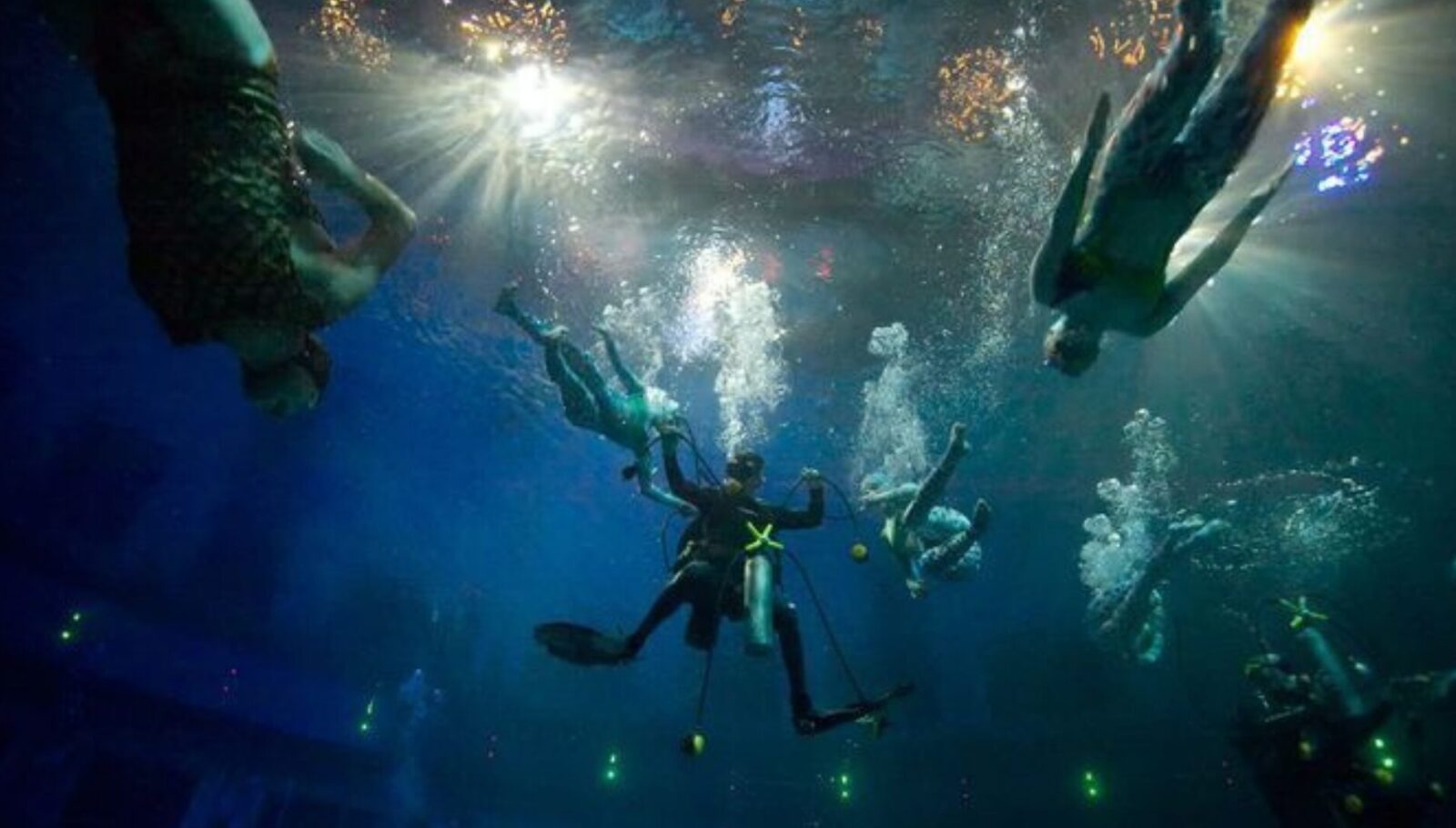
One of the most common questions synchronized swimmers hear is:
“How do you breathe underwater?”
The simple answer is: we don’t. But there is an important nuance.
Many people assume that because synchronized swimmers spend so much time underwater, we must be able to hold our breath for several minutes while performing. In reality, synchronized swimming, freediving, scuba diving, and just swimming are completely different disciplines that place very different demands on the human body. Let’s explore what actually happens.
Synchronized swimmers are not freedivers
Yes, synchronized swimmers develop exceptional breath control. Years of training increase lung capacity, improve tolerance to carbon dioxide, and teach the body to function efficiently during repeated breath holds. However, our goal is not to stay underwater for as long as possible. Our goal is to perform complex choreography without breathing while moving at high speed, staying perfectly synchronized with teammates, changing positions, swimming underwater, and executing technical elements with precision.
There is a huge difference between holding your breath while staying still and holding your breath while working at maximum intensity. A trained synchronized swimmer might remain underwater for several minutes when completely relaxed. But during a routine, where every second involves movement, power, and coordination, a typical underwater sequence usually lasts around 30-45 seconds.
Why? Because movement dramatically increases oxygen consumption.
To understand this better, let’s compare three different athletes:
- A synchronized swimmer
- A freediver
- A scuba diver
Although all three spend time underwater, their bodies operate in very different ways.
The freediver: mastering oxygen conservation
During a breath-hold dive, the body activates a remarkable set of survival mechanisms known as the mammalian dive response. Heart rate slows down, reducing oxygen consumption. Blood flow is redirected toward vital organs such as the brain, heart, and lungs while less essential tissues receive less circulation. This allows the body to preserve oxygen for as long as possible. As depth increases, water pressure compresses the lungs. To protect them, blood shifts toward the chest cavity, helping maintain lung structure despite the increasing pressure.
Meanwhile, carbon dioxide (CO₂) gradually accumulates in the body. Interestingly, the urge to breathe is usually triggered not by a lack of oxygen, but by rising CO₂ levels. As the dive continues, oxygen levels slowly decrease. Experienced freedivers develop extraordinary adaptations through years of training, allowing them to tolerate conditions that would be uncomfortable or even dangerous for untrained individuals. Freediving is not only a test of physical ability it is also a remarkable example of the human body’s capacity to adapt.
The synchronized swimmer: high performance without air
Now imagine a completely different scenario.
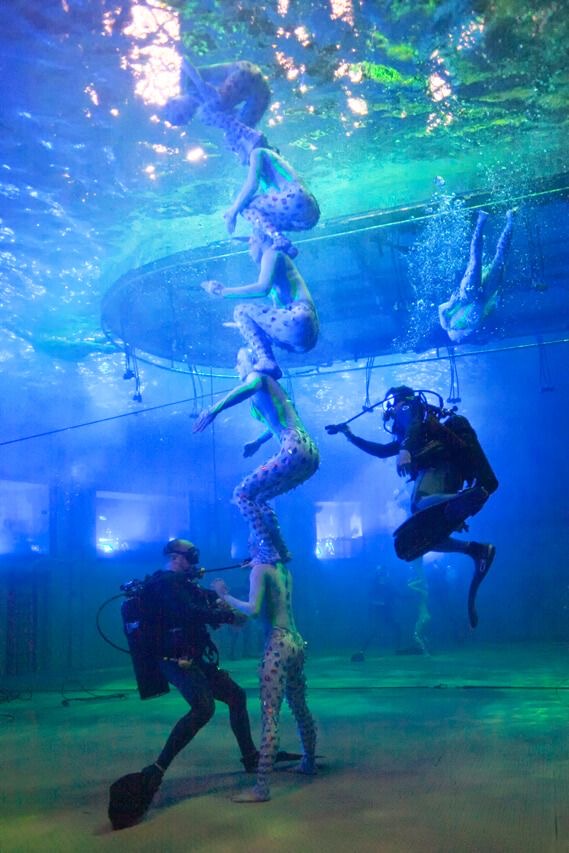
Instead of remaining calm and conserving energy, a synchronized swimmer is executing explosive movements underwater while holding her breath. Every muscle is working. The legs are kicking. The arms are pulling. The body is rotating, accelerating, and changing direction. All of this requires oxygen, but during the underwater sequence, no new oxygen is entering the body. As a result, carbon dioxide accumulates rapidly, creating a powerful urge to breathe. At the same time, the muscles consume oxygen faster than it can be replenished. Eventually, part of the energy production shifts toward anaerobic metabolism, leading to lactate accumulation, muscle burning, and fatigue.
The brain is also functioning with gradually decreasing oxygen levels, which can affect concentration, coordination, and reaction time. Yet synchronized swimmers must continue performing with absolute precision. Years of training allow athletes to adapt to these conditions and maintain control even when their bodies are under significant physiological stress.
Once they return to the surface, recovery begins immediately. Breathing rate increases, heart rate rises, and the body works quickly to eliminate excess carbon dioxide and restore normal oxygen levels.
This is why even a relatively short routine can feel like an all-out sprint. From a physiological perspective, synchronized swimming combines elements of swimming, gymnastics, dance, acrobatics, and repeated breath-hold training making it one of the most demanding sports in the world.
The scuba diver: breathing underwater
Scuba diving works very differently.
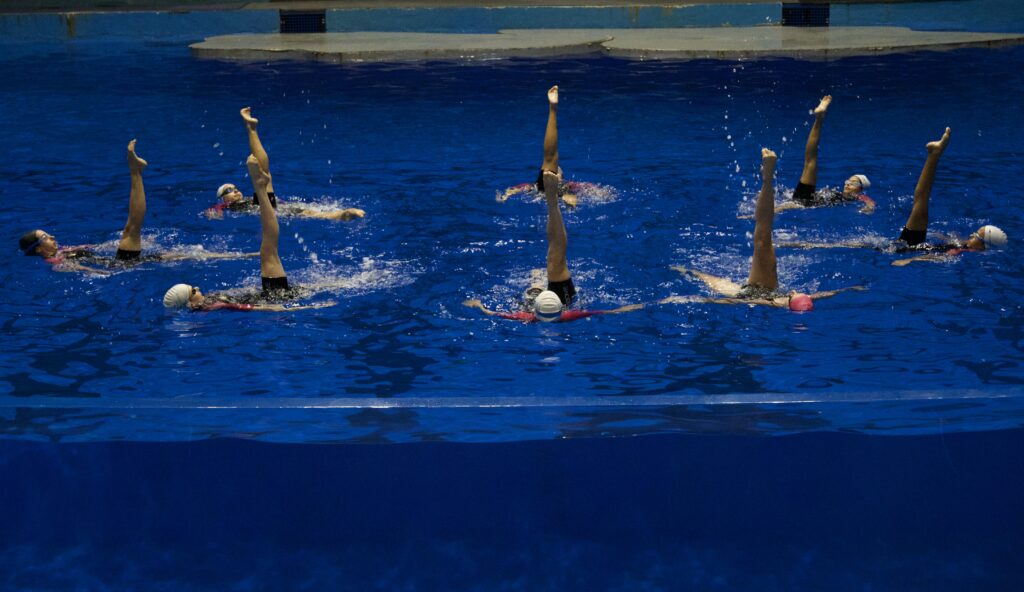
Unlike freedivers or synchronized swimmers, scuba divers continue breathing underwater through a regulator connected to a compressed air tank. Because oxygen is constantly supplied, the body does not experience prolonged breath-hold stress or significant oxygen deprivation. Instead, the main challenge becomes pressure. Water pressure increases by approximately one atmosphere every 10 meters (33 feet) of depth. At 30 meters, a diver experiences roughly four times the pressure present at the surface.
The regulator delivers air at the surrounding pressure, allowing the diver to breathe normally. However, the increased pressure affects how gases behave inside the body. Nitrogen becomes more soluble in tissues during the dive. This is why divers must ascend slowly. Rising too quickly can cause dissolved gases to form bubbles, potentially leading to decompression sickness.
At greater depths, nitrogen can also affect the nervous system, causing a phenomenon known as nitrogen narcosis, often described as a feeling similar to mild intoxication. Oxygen behaves differently under pressure as well. At extreme depths, elevated oxygen pressure can become toxic, which is why technical divers often use specialized gas mixtures. Even though scuba divers continue breathing, diving still places significant demands on the body due to pressure, cold water, increased breathing resistance, and mental focus. Many divers finish a dive feeling surprisingly tired despite relatively low physical activity.
So, what’s the difference?
| Synchronized Swimmer | Freediver | Scuba Diver |
| High-intensity exercise while holding breath | Breath-hold with oxygen conservation | Continuous breathing underwater |
| Rapid CO₂ buildup | CO₂ buildup and gradual oxygen depletion | CO₂ generally removed through breathing |
| High lactate production | Minimal muscular work during relaxed dives | Usually moderate physical effort |
| Main challenge: hypoxia during intense movement | Main challenge: hypoxia and pressure | Main Challenge: pressure and gas management |
The bottom line
There is no point in synchronized swimmers holding their breath for several minutes, because they move a great deal and very quickly underwater. Freedivers train their bodies to conserve oxygen. Scuba divers carry their oxygen supply with them.
Different underwater disciplines address the same task in completely different ways and that is precisely what distinguishes them.
If all these methods are just different answers to the same problem, then the question we started with still stands: how do we breathe underwater?
Photos courtesy of the author.

Following her athletic career, Iana transitioned into the world of professional entertainment. Her artistic journey has taken her from the “Olympic Champions Show” in Moscow to leading roles in major aquatic productions across Turkey, South Korea, and China.
Today, Iana performs with Cirque du Soleil in the iconic production O at the Bellagio in Las Vegas.
Editor's Note: At StageLync, an international platform for the performing arts, we celebrate the diversity of our writers' backgrounds. We recognize and support their choice to use either American or British English in their articles, respecting their individual preferences and origins. This policy allows us to embrace a wide range of linguistic expressions, enriching our content and reflecting the global nature of our community.
🎧 Join us on the StageLync Podcast for inspiring stories from the world of performing arts! Tune in to hear from the creative minds who bring magic to life, both onstage and behind the scenes. 🎙️ 👉 Listen now!
