Circus Ring of Fame Foundation® Announces 40th Anniversary Awards Show and The Class of 2027
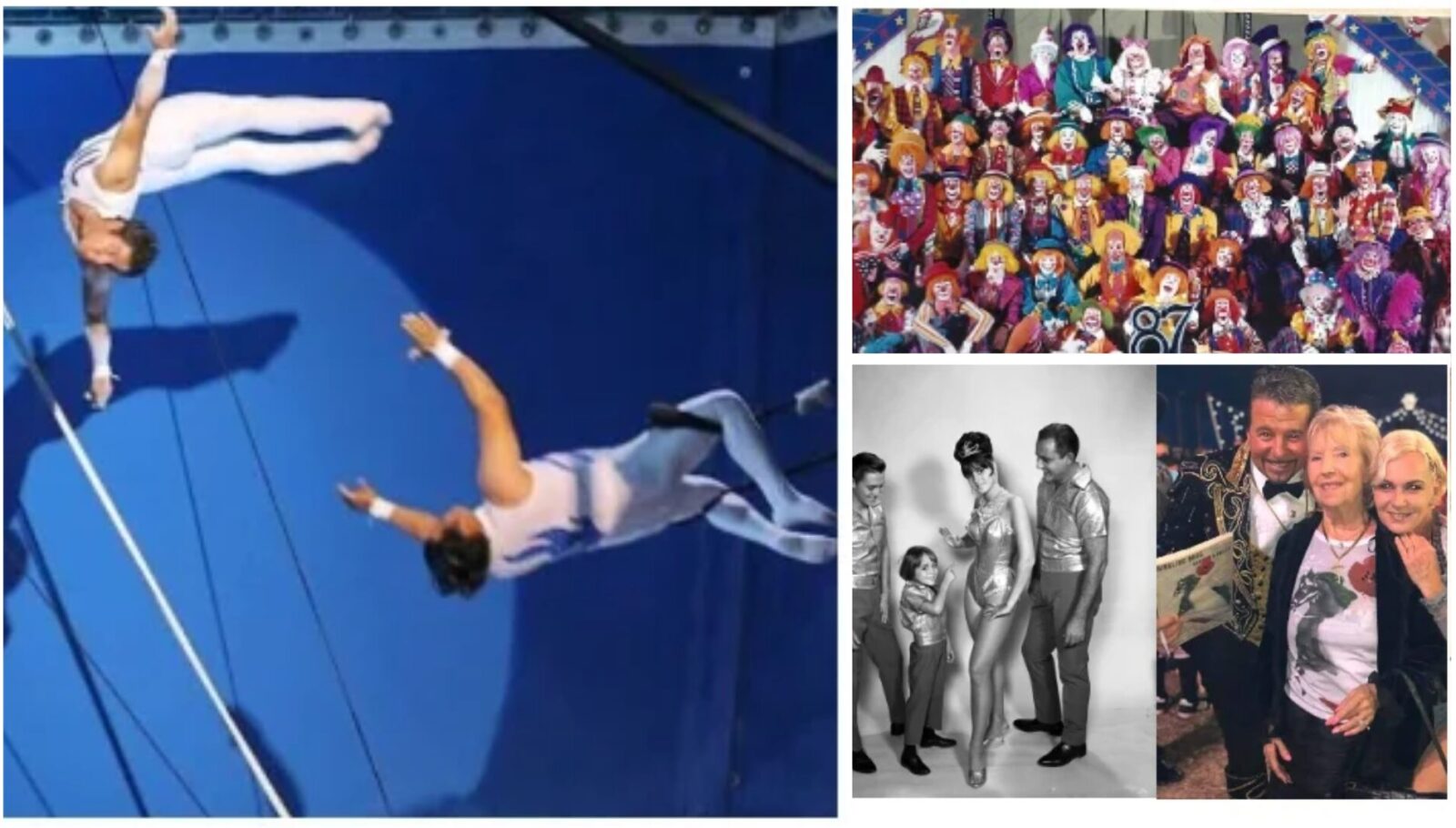
The Circus Ring of Fame Foundation® has announced the first inductees for its Class of 2027, recognizing three major names in circus history: the world-renowned Flying Caballeros Circus Family, Ringling Bros. and Barnum & Bailey Clown College, and eight generations of the Canestrelli family of circus artists.
The honorees will be formally inducted during the 40th Anniversary Circus Ring of Fame Awards Show on Saturday, February 13, 2027, at 4:30 p.m.
“This year’s class of inductees exemplifies the highest of achievement in circus arts and culture,” said Bill Powell, chair of the Foundation. “We congratulate the winners and their families and look forward to seeing everyone at the awards show. This stellar group of inductees coupled with our 40th anniversary will be a special event for the global circus community to celebrate. We expect attendance to be at an all-time high.”
Additional inductees for the Class of 2027 are expected to be announced soon.
Meet the Circus Ring of Fame® class of 2027 inductee
The Caballero Circus Family — The Flying Caballeros
For six generations, the Caballero family has carried forward one of the circus world’s most demanding traditions: the flying trapeze. Known professionally as The Flying Caballeros, the family has built an international reputation through technical precision, daring, and a continual pursuit of skills that have long defined the upper limits of aerial performance.
Represented today by Ruben and Luis Caballero, the family’s circus roots extend across six generations. Ruben and Luis began their circus careers in Mexico on the flying trapeze and went on to become both performers and circus producers. Collectively, their careers span approximately 60 years in the circus arts, including some 30 years performing at the highest professional level. The family has also been associated with Circus Caballero, extending its influence beyond performance into circus production.
At the center of the Caballero legacy is the flying trapeze, an art in which strength and athleticism must be matched by timing, spatial awareness, and absolute trust among performers. For the Caballeros, mastery of the discipline has meant more than preserving a family tradition. Successive generations have sought to advance it.
Among the family’s most significant accomplishments is the quadruple somersault, one of the benchmark feats of the flying trapeze. Multiple members of the Caballero family have successfully performed the quadruple, demonstrating an exceptional level of technical skill across generations. More recently, a family member has taken the feat even further by performing the quadruple blindfolded, adding another extraordinary degree of difficulty to an already formidable aerial maneuver.
That combination of tradition and technical progression has made the Caballeros an example for younger generations of trapeze artists. Their influence is found not only in the skills they have performed but also in the standard they have established for aspiring aerialists seeking to master one of the circus’s most difficult disciplines.
The family’s accomplishments have received significant recognition from the international circus and acrobatic communities. In 2024, the Caballeros were inducted into the World Acrobatic Society. In 2025, they received the Gold Clown at the International Circus Festival of Monte-Carlo, one of the circus profession’s most prestigious competitive honors.
Their career has also given the Caballeros an international presence extending well beyond their origins in Mexico and the United States. Their professional recognition spans North America, Europe, Asia, South America, and Australia/Oceania, reflecting the global reach of a family whose identity has become closely associated with elite flying-trapeze performance.
Across six generations, the Caballero family’s history embodies one of the enduring traditions of the circus: specialized knowledge and technique passed from parents to children and from one generation of performers to the next. Yet the Caballeros have done more than preserve what they inherited. Each generation has faced the challenge of maintaining the family’s standards while attempting increasingly difficult feats of its own.
For a flying-trapeze family, that progression is particularly significant. The discipline demands an unusual combination of individual athleticism and collective precision. A flyer may execute the somersault, but the success of the feat depends upon the catcher, the timing of the release, and the accumulated experience of the entire troupe. In that sense, the Caballeros’ achievements are not simply the accomplishments of individual performers. They are the product of a family tradition refined over decades.
From their beginnings in Mexico to their work as The Flying Caballeros and Circus Caballero, the family has contributed to circus as performers, producers, and practitioners of the flying trapeze. Their longevity is notable, but longevity alone does not explain their place in the profession. Their distinction rests on maintaining an elite level of performance while continuing to push the technical boundaries of their art.
The quadruple somersault stands as perhaps the clearest expression of that legacy. Having multiple members of one family accomplish a skill of such difficulty is exceptional; carrying the feat forward to a blindfolded performance illustrates the Caballeros’ continuing determination to explore what is possible in the air.
For six generations, the Caballero Circus Family has preserved, performed, and advanced the art of the flying trapeze, creating a legacy defined by family, innovation, and extraordinary aerial achievement.

Eight Generations of the Canestrelli Family of Circus Artists
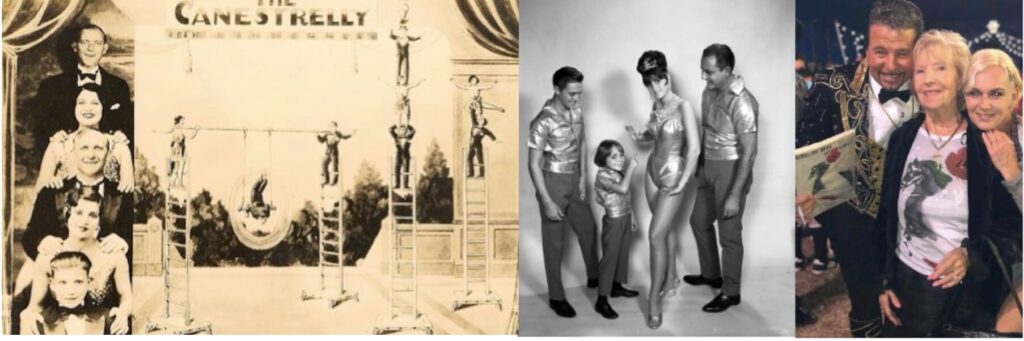
The Canestrellis are an eight-generation Italian circus dynasty whose artists have distinguished themselves in unsupported ladder balancing, juggling, animal acts, bounding rope, trampoline, and circus production.
The first Canestrelli Circus was founded in Italy in 1902 by Riccardo Canestrelli and his wife, Teresa Fumagalli, and was later continued with his second wife, Olga Jung. Riccardo’s children — Ottavio, Frederico, Gino, Olga, Aurelia, Pepo, Oreste and Pietro — became accomplished performers, producers and teachers of the circus arts, establishing family branches that would carry the Canestrelli tradition around the world.
Over eight generations, their descendants have received some of the circus world’s highest honors, including multiple gold and silver awards at the Festival International du Cirque de Monte-Carlo, several Guinness World Records and induction into numerous circus museums and halls of fame.
In 1951, Riccardo’s eldest son, Ottavio Canestrelli, and his wife, Genoveffa, opened the Casa Canestrelli Circus Restaurant in Sarasota, Fla. The establishment became a showcase for members of the family, including Ottavio’s daughters, La Tosca and Celeste; his son, Freddy, and Freddy’s wife, Ortans Cristiani; and Ottavio’s niece, Aurelia Canestrelli-Nock. Aurelia Canestrelli-Nock went on to become an influential board member of the Circus Ring of Fame Foundation.
The family also produced numerous benefit performances, including a fundraiser that helped Sarasota Hospital acquire its first iron lung machines.
More than a century after Riccardo Canestrelli founded the family circus, the Canestrelli legacy continues. Members of its many branches still perform around the world with major circuses, on television and Broadway, while others have carried the tradition forward through their own circus productions and The Grand Gypsy, an award-winning memoir chronicling the family’s remarkable circus heritage.
Ringling Bros. and Barnum & Bailey Clown College
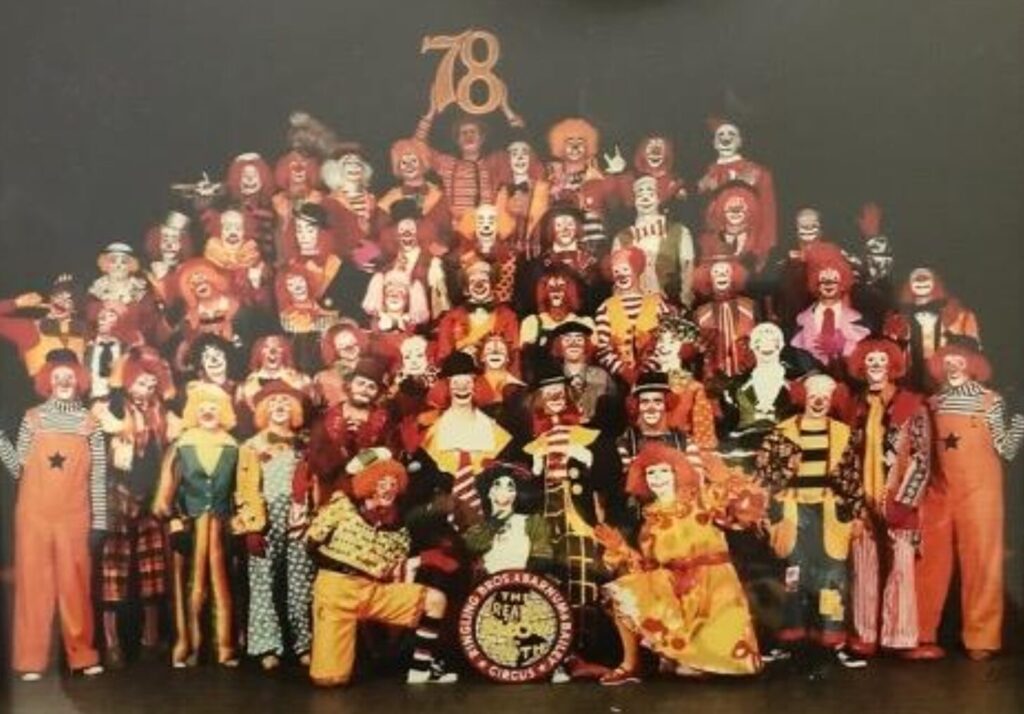
Ringling Bros. and Barnum & Bailey Clown College, founded by circus magnate Irvin Feld in 1968, stands as one of the most influential training programs in circus history. Its greatest achievement was preserving and revitalizing the art of clowning at a time when traditional circus performance was fading, producing generations of highly skilled performers who carried the craft into modern entertainment.
Graduates not only became featured stars with Ringling Bros., but also went on to shape comedy, theater, film, and theme park entertainment worldwide. By blending classic clowning techniques with contemporary performance styles, Clown College ensured that the timeless language of physical comedy would continue to evolve and delight audiences across generations.
Clown College became one of the most exclusive and rigorous performance schools in the world, often cited as having an acceptance rate lower than Harvard University.
The new inductees to the Circus Ring of Fame will join the 160 honored since 1987. All of those recognized have made a significant contribution to the art and culture of the circus. Additional honorees will be announced soon.
Editor's Note: At StageLync, an international platform for the performing arts, we celebrate the diversity of our writers' backgrounds. We recognize and support their choice to use either American or British English in their articles, respecting their individual preferences and origins. This policy allows us to embrace a wide range of linguistic expressions, enriching our content and reflecting the global nature of our community.
🎧 Join us on the StageLync Podcast for inspiring stories from the world of performing arts! Tune in to hear from the creative minds who bring magic to life, both onstage and behind the scenes. 🎙️ 👉 Listen now!