Lisa Richards Toney: Why the Arts Matter to Democracy
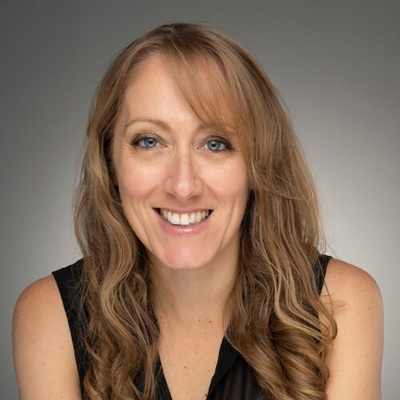
At StageLync, our conversations often reveal the deeper currents shaping the performing arts ecosystem, and our latest discussion with Lisa Richards Toney, President and CEO of APAP, is no exception. What begins as a reflection on the past year quickly expands into a thoughtful exploration of the challenges and opportunities facing our field—from shifting funding realities to the essential role of the arts in sustaining democratic values. Lisa brings clarity, perspective, and a forward-looking optimism to questions around advocacy, community impact, and the future intersection of creativity and technology.
This conversation is a preview of our full episode, which drops next week.
It’s been a year since we last spoke. What kind of year has it been for you and for APAP?
It’s been a year of intense change and recalibration. After the last APAP conference in January, the team took a paid month off in February—very intentionally. That pause was to prepare everyone, mentally and emotionally, for the rollout of APAP’s new sustainability plan, which launched in early March. When staff returned, many roles and job descriptions had shifted to align with long-term sustainability goals, so people needed to be rested enough to really hear the changes and see the opportunities in them.
At the same time, the external environment became more volatile: shifting political realities, unstable funding, fluctuating audience participation, and questions about civic engagement. APAP has been strengthening its operational infrastructure to meet that moment, not starting from scratch but “driving in” work already begun and making key adjustments along the way. Over spring, summer and into fall, it’s been a major period of adjustment—but the organization is now settling into its new shape and purpose.
Why is arts funding becoming harder to secure, and how does that connect to democracy?
Lisa Richards Toney points out that the funding dilemma isn’t new—it’s baked into traditional arts business models. For many non-profit presenters and producers, income is part earned revenue (tickets, memberships, conferences) and part generosity (patrons, donors, foundations). When people are financially stretched, contributing to the arts can feel like a luxury, even though it is deeply tied to quality of life.
On top of this, foundations themselves are going through an identity shift. For service organizations like APAP, foundation support historically underwrote education programs, regranting, and professional development. Now those funders are re-prioritizing in a world where resources are not infinite. Lisa is leaning into a bigger frame: supporting democracy. She argues that the arts are not outside civic life; they are civic life. The performing arts create spaces where different points of view coexist, where audiences sit together, stay in the room, and absorb challenging ideas without immediately retreating to their own algorithmic bubbles. That practice of sitting with difference—of letting a piece of art simply be—is a democratic skill. If we censor or pre-approve art too tightly, the quality of the work suffers, and so does our collective ability to imagine, question, and remain fully human.
You talk about arts venues as “hubs for cities.” What does that look like in practice?
Lisa Richards Toney shares a story from Wilmington, North Carolina. At a conference held at Thalian Performing Arts Hall, the mayor addressed the group and said, “Thalian Performing Arts Hall is the busiest building in all of Wilmington.” He didn’t say the busiest performing arts center—he said the busiest building. That distinction matters. It repositions the arts venue not as a “nice extra” but as essential city infrastructure.
For Lisa, this is a powerful lens: if a theatre is the busiest building in town, it’s clearly a place people need and use. It becomes part of the city’s architectural and social backbone—a gathering place where community, joy, questioning, and shared experience happen. She describes watching the venue’s executive director get stopped repeatedly by locals who wanted to tell him about shows they’d seen, whom they brought, and how it made them feel. That visible, visceral joy and engagement is proof of permanence in spite of the ephemerality of live performance. Shows may come and go, but the impact—on civic life, on the local economy, on social cohesion—creates a lasting imprint.
Advocacy is a big part of APAP’s agenda. How can arts professionals build their “advocacy muscle”?
Lisa Richards Toney believes advocacy can’t be outsourced to a few big national organizations anymore—it has to be woven into everyone’s practice. Funding shifts are changing who can present and produce, which means roles across agents, presenters, and producers are in flux. To survive that, advocacy has to become part of the everyday job, not an occasional campaign.
She stresses that the most effective strategies are local. The real power lies in telling local stories: who comes through your doors, how many people, what that means for education, health, mobility, city services, and the broader economy. Organizations like APAP can then amplify those stories nationally and internationally. And here’s the good news: artists, agents, and managers already know how to hustle and how to tell compelling stories. Advocacy is essentially storytelling in a different language—one that includes terms like infrastructure, GDP, mobility, and public health. Lisa argues that arts management and presenting curricula should be “laced” with advocacy training; otherwise the sector risks siloing itself and having to fight its way back into civic conversations later, from scratch.
What unique leadership and creative capacities do artists bring to society—especially in the age of AI?
Lisa Richards Toney sees artists as deeply skilled bridge-builders: they connect ideas and people from wildly different backgrounds, hold complex emotional spaces, and translate big questions into experiences that touch audiences in ways words alone often can’t. She talks about the “human making” that happens through the arts—how participating in or experiencing art can unlock parts of us we’ve shut down just to survive. That unlocking changes how people move through the world, increasing their personal agency and “mobility” to become someone, do something, and lead.
She believes artists should be shaping AI, particularly around empathy and ethical use. While there are valid fears—AI-generated music or images replacing human jobs—she and Anna highlight the irreplaceable power of human-to-human connection: like an 87-year-old pianist finally performing her own composition and moving an entire hall to tears. AI can mimic form, but it can’t replicate the lived journey in that body on that stage in that moment.
Beyond creativity, arts people carry underrated, highly transferable skills: the ability to meet immovable deadlines (opening night happens whether you’re ready or not), coordinate complex teams, communicate across personalities, and innovate under pressure. Lisa jokes that a stage manager might be the best hire in any field because they simply “get it done.” She wants more artists to run for office and step into civic leadership, because when you break down what the arts actually touch—education, health, technology, democracy—the sector is far more powerful than it has ever given itself credit for.
Editor's Note: At StageLync, an international platform for the performing arts, we celebrate the diversity of our writers' backgrounds. We recognize and support their choice to use either American or British English in their articles, respecting their individual preferences and origins. This policy allows us to embrace a wide range of linguistic expressions, enriching our content and reflecting the global nature of our community.
🎧 Join us on the StageLync Podcast for inspiring stories from the world of performing arts! Tune in to hear from the creative minds who bring magic to life, both onstage and behind the scenes. 🎙️ 👉 Listen now!
